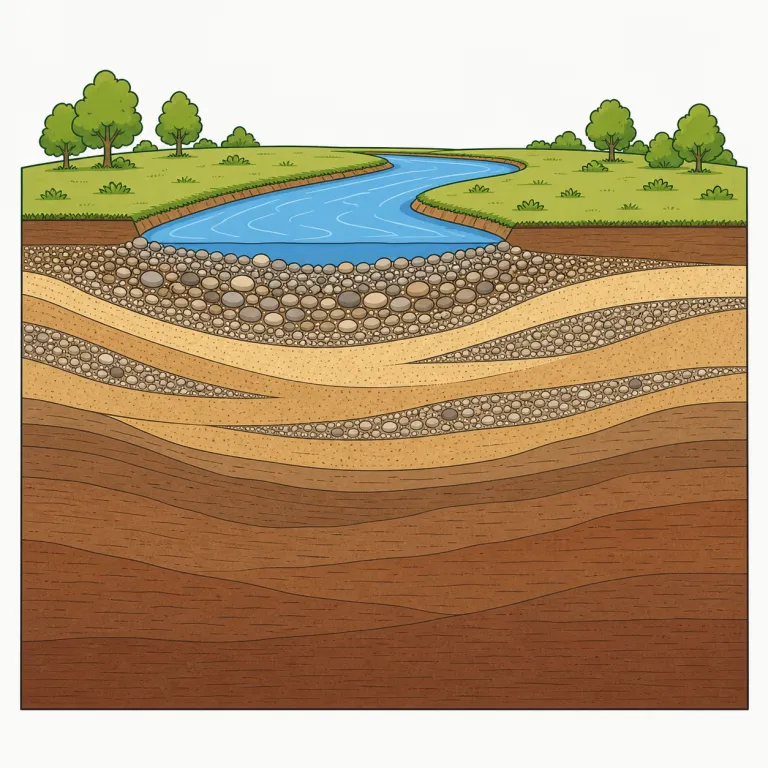
沖積層
解説 Definition
河川が洪水時に運搬・堆積させた砂や泥などの沈積物からなる層。低地に形成される肥沃な堆積地層。
Alluvium is soil, sand, or other material left behind by flowing water, especially near rivers. It is used in geography, geology, and farming contexts. This material often creates fertile land.
覚え方のコツ Memory Tip
まず alluvial soil / alluvial plain とセットで覚える。alluvium は『川が運んできて積もった土砂そのもの・その堆積層』で、alluvial はその形容詞。イメージは大雨のあと、川があふれて低地に細かい砂や泥を広く置いていく感じ。sediment だと堆積物全般だが、alluvium はとくに river・flood・deposit の文脈が中心。岩盤や火山灰ではなく、『川由来で、低地を肥沃にする堆積物』まで含めて場面で覚えると残りやすい。
Learn it together with alluvial, because the two words support each other. Alluvium is the noun, and alluvial is the adjective, so that pair makes recall easier. Keep a river scene in mind: water moves material and leaves it behind after flooding.
例文
Deposits of alluvium make the floodplain extremely fertile.
沖積堆積物が氾濫原を非常に肥沃にしている。
Farmers have traditionally settled near areas rich in alluvium.
農民は伝統的に沖積堆積物に富む地域の近くに定住してきた。
The geological survey identified layers of alluvium beneath the surface.
地質調査は地表下の沖積層を特定した。
alluvium の類義語・関連語
alluvium の語源・成り立ち Etymology
ラテン語 alluere「洗い流す」が語源で、ad-「〜へ」+ luere「洗う」から成ります。川が土砂を“洗って運び、積もらせたもの”と考えると沖積層の意味が腑に落ちます。語根は deluge や dilute にも通じます。
Alluvium comes from Latin alluere, meaning "to wash against" or "to wash up," from ad-, "to," and luere, "to wash." The central image is material carried and laid down by flowing water. From that, the word came to mean soil or sediment deposited by rivers. The same root appears in words such as dilute and deluge.
同じレベルの語彙をもっと
外部辞書で調べる
この英単語をクイズで覚えよう