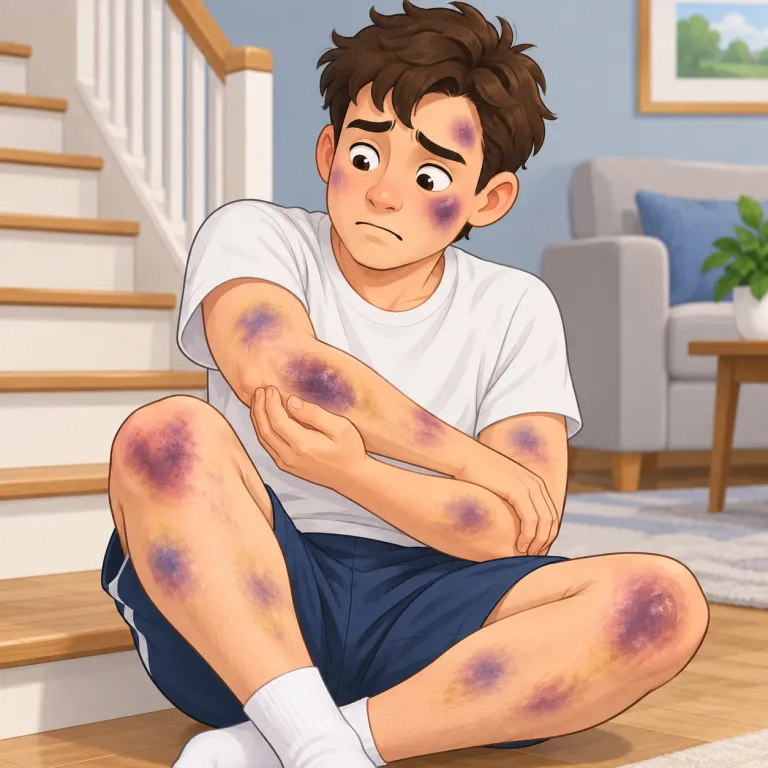
あざだらけ
解説 Definition
打撲などで体があざだらけになっていること。転倒、けんか、スポーツ後など、皮膚が黒っぽく青紫に変色して痛々しく見える状態を表す。
Literally, this expression suggests the dark colors of bruised skin. In normal use, it means covered with bruises or badly beaten. People use it when talking about falls, fights, sports, and injuries. The tone is physical and painful, so it adds more feeling than a plain word.
覚え方のコツ Memory Tip
black(黒)とblue(青)を並べ、打撲で皮膚が黒や青紫に変色した様子をそのまま思い浮かべる。転倒、けんか、激しいスポーツなどの後に、be black and blueや、体の一部+was black and blueの形で「あざだらけだ」と言う。服の色の組み合わせではない。
First picture the literal image: the dark colors of bruised skin. Do not translate the words one by one; connect that image with the real meaning, covered with bruises or badly beaten. Learn the expression in a common sentence pattern, because the words around it often show whether the meaning is literal or idiomatic.
例文
He fell down the stairs and was black and blue the next day.
彼は階段から落ち、翌日はあざだらけだった。
My legs were black and blue after the rugby match.
ラグビーの試合後、脚はあざだらけだった。
Doctors found the child black and blue and opened an investigation.
医師はその子に多数のあざを見つけ、調査が始まった。
black and blue の語源・成り立ち Etymology
打撲のあと皮膚が黒っぽく、青紫に変色することから生まれた表現。色名を並べることで、ひどく打たれた状態を視覚的に伝える。現在では元の事物を直接指すより、その場面から生まれる印象だけが残り、日常会話や新聞記事でも比喩として使われる。
Bruises often turn dark blue, purple, or black. The color pair became a direct way to describe a badly bruised body.
同じレベルの語彙をもっと
外部辞書で調べる
この英熟語をクイズで覚えよう