筋を違える、捻挫する
verb 動詞主にイギリス英語で、首や背中などを急にひねって筋を痛めることを表す動詞です。rick one's neck のように身体部位を目的語に取り、骨折ではなく軽い捻挫や筋違いを指します。
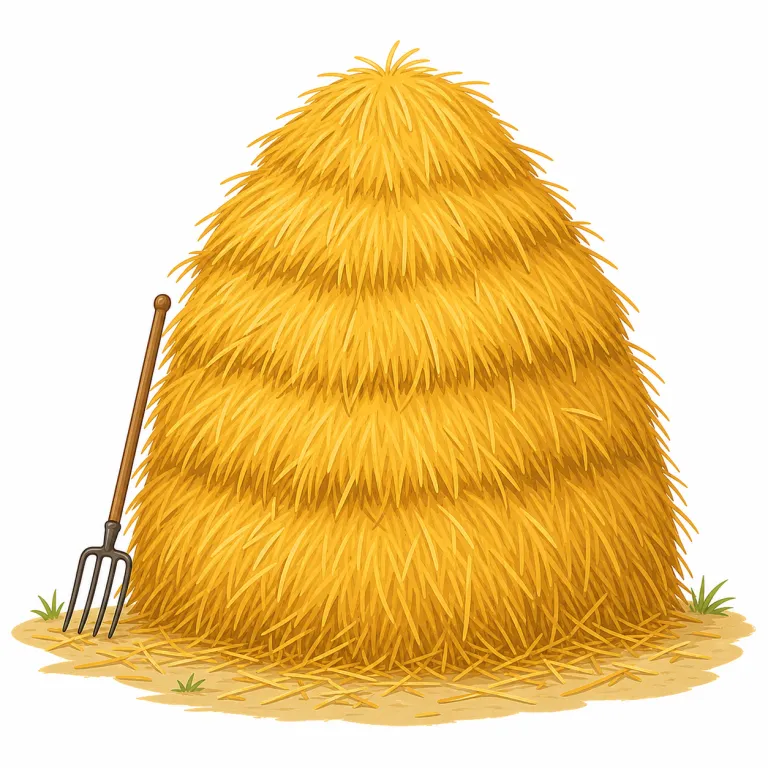
rick はTOEIC 990・TOEFL 100・IELTS 7.5レベルの英単語で、「干し草の山」という意味があります。発音記号は /rɪk/ です。
干し草や藁などを屋外に積み上げた山のことです。農業において収穫物を乾燥・保管するために作られます。通気性と安定性を保つために高さや幅を調整しながら積んでいきます。
A rick is a pile or stack of hay, straw, or similar material stored outdoors. It is a traditional farming word and is less common in everyday modern English. The shape is usually neat and made for storage or drying.
まず hayrick をセットで覚えると定着しやすいです。hayrick はそのまま「干し草の山」なので、hay を外した rick も「農作物を屋外に積み上げた山」と連想できます。単なる pile や stack より、干し草や藁を乾かして保存するために、形を整えて高く組んだ感じが強い語です。農業文脈で a hayrick, build a rick のように結び付けると残りやすく、男性名の Rick とは別物だと切り分けると混乱しません。
A good memory hook is `hayrick`. If a `hayrick` is a stack of hay, then `rick` is the stack shape itself, especially in farming. It is more specific than a simple `pile` or `stack`, and it is unrelated to the name `Rick`.
A rick stands by the barn.
納屋のそばに干し草の山があります。
We built a rick of dry hay.
乾いた干し草を積んで山を作りました。
We see a rick in the field.
畑で干し草の山を見かけます。
この語をはじめて出題された 51人 のうち 34人 が正解しました(67%)。
えいたんごクイズの回答から集計した独自データです。1人につき最初に出題されたときの1回だけを数えており、復習や2回目以降の回答、「わからない」と時間切れは含みません。 集計時点は 2026年9月19日 です。
文脈によって、次の意味でも使われます。
主にイギリス英語で、首や背中などを急にひねって筋を痛めることを表す動詞です。rick one's neck のように身体部位を目的語に取り、骨折ではなく軽い捻挫や筋違いを指します。
古英語 hreac「積み上げた干し草・穀物の山」にさかのぼる語で、農作物を地面の湿気や雨から守るため高く組んだ山を指しました。後の hayrick も同語を含み、単なる草ではなく「保存のために整えて積んだ山」だと分かると今の意味が自然につながります。
Rick comes from Old English hreac, meaning a heap or stack of hay or grain. It referred to crops piled up carefully to protect them from rain and ground moisture. The word kept that sense of an arranged farm stack rather than just a loose pile. It also appears in hayrick.
この英単語をクイズで覚えよう