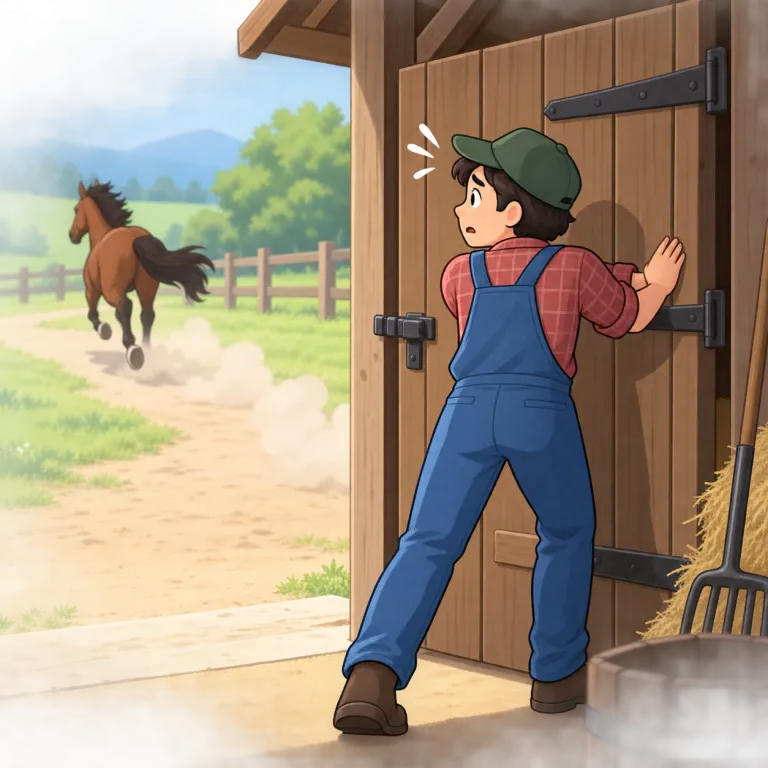
shut the stable door after the horse has bolted
後の祭り
解説 Definition
字面では馬が逃げた後に馬小屋の戸を閉めること。比喩では問題発生後に対策しても遅すぎること。安全対策、規則変更、謝罪で使われ、予防を怠った愚かさへの批判を含む。 字面通りの場所や物ではなく、状況や心理の動きを映す慣用的な言い方として理解する。
shut the stable door after the horse has bolted means to act only after it is too late to prevent damage. Literally, it suggests closing a stable after the horse has escaped. It is often used in late rules, late security, and late apologies, and it usually feels critical and proverbial.
覚え方のコツ Memory Tip
まず字面の絵として、馬が逃げた後に馬小屋の戸を閉めることを具体的に思い浮かべる。そこから、目に見える場面と本当の意味のずれを確認すると、shut the stable door after the horse has bolted は「後の祭り」という意味へつながる。安全対策、規則変更、謝罪の文脈でよく出て、単なる直訳ではなく「予防を怠った愚かさへの批判を含む」という点が重要。前後には situation、problem、plan、people など、対象を示す語が置かれやすい。似た語があっても、中心の比喩を戻れば混同しにくい。
Picture closing a stable after the horse has escaped. The real meaning is not only about that literal scene; it means to act only after it is too late to prevent damage. Notice common contexts such as late rules, late security, and late apologies, and remember the image before translating the words one by one.
例文
The company tightened its security after the data leak, but critics said it was shutting the stable door after the horse had bolted.
会社は情報漏えい後にセキュリティを強化したが、批判者はそれでは後の祭りだと言った。
Installing cameras after the painting was stolen is just shutting the stable door after the horse has bolted.
絵が盗まれた後でカメラを設置しても、まさに後の祭りだ。
They apologized only after customers left in anger, which felt like shutting the stable door after the horse had bolted.
顧客が怒って去った後でようやく謝罪したので、後の祭りのように感じられた。
shut the stable door after the horse has bolted の語源・成り立ち Etymology
馬が重要な財産だった農村生活のことわざで、逃げた後の戸締まりは無意味という経験に基づく。文字通りの場面が社会生活や判断の比喩として使われ、現在の「後の祭り」という意味に定着した。 特定の一語ではなく、場面全体の連想が慣用的な意味を支えている。
The phrase comes from rural life, where a horse was valuable and losing it made later door-closing useless. Over time, that image became a metaphor for that action.
同じレベルの語彙をもっと
外部辞書で調べる
この英熟語をクイズで覚えよう