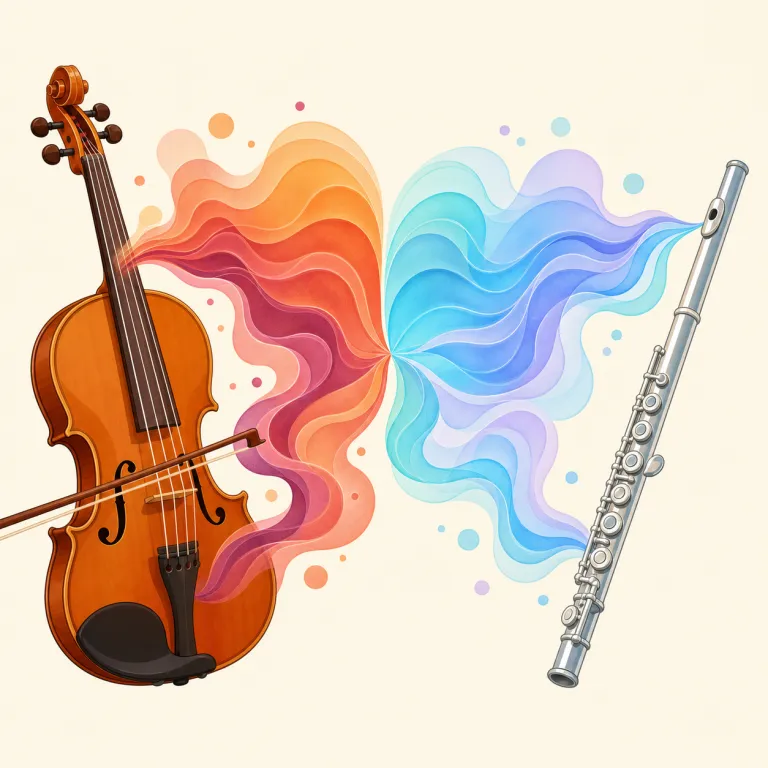
音色
解説 Definition
楽器や声が発する音の特有の色合いや品質。同じ高さと強さの音でも、異なる音源によって異なる音色を持ちます。音楽の重要な表現要素です。
Timbre is the special quality of a sound that makes it different from other sounds, even when they have the same pitch and loudness. It helps us tell one voice or musical instrument from another. This word is mainly used in music and sound studies.
覚え方のコツ Memory Tip
音を聞くときは、まず pitch が高さ、volume が大きさ、そして timbre が「その楽器・その声らしさ」だと3点セットで覚えると定着しやすい語です。たとえば同じドの音を同じ大きさで出しても、ピアノとフルートで違って聞こえる、その違いが timbre。音楽・音声の文脈でよく出るので、 tone よりも「感情」ではなく「音質の個性」を指す語として区別すると忘れにくいです。
Remember the sound trio: `pitch` is high or low, `volume` is loud or soft, and `timbre` is the special sound quality. Two instruments can play the same note at the same loudness, but still sound different because of `timbre`. This word is easier to keep if you connect it with voices and musical instruments, not emotion.
例文
The violin's timbre is warm and resonant.
バイオリンの音色は温かく、響きが豊かです。
Each instrument has a unique timbre that distinguishes it from others.
各楽器は他の楽器と区別される独自の音色を持っています。
The singer's rich timbre captivated the audience.
その歌手の豊かな声質は聴衆を魅了しました。
timbre の類義語・関連語
紛らわしい語
timbre の語源・成り立ち Etymology
timbre はフランス語で、もとは「鐘の響き」「小さな太鼓」を表し、さらに中世ギリシャ語を経て古代ギリシャ語 tympanon「太鼓」にさかのぼります。打って鳴らしたときの響きの違いが核なので、「音の個性」つまり「音色」になりました。関連語は tympani, tympanum.
"Timbre" came into English from French. In French, it referred to the ringing of a bell or a drum-like sound, and it goes back through Medieval Greek to Greek "tympanon," meaning "drum." The word gradually shifted from the sound of struck instruments to the special sound quality of any voice or instrument. Related English words include "tympani" and "tympanum."
同じレベルの語彙をもっと
外部辞書で調べる
この英単語をクイズで覚えよう