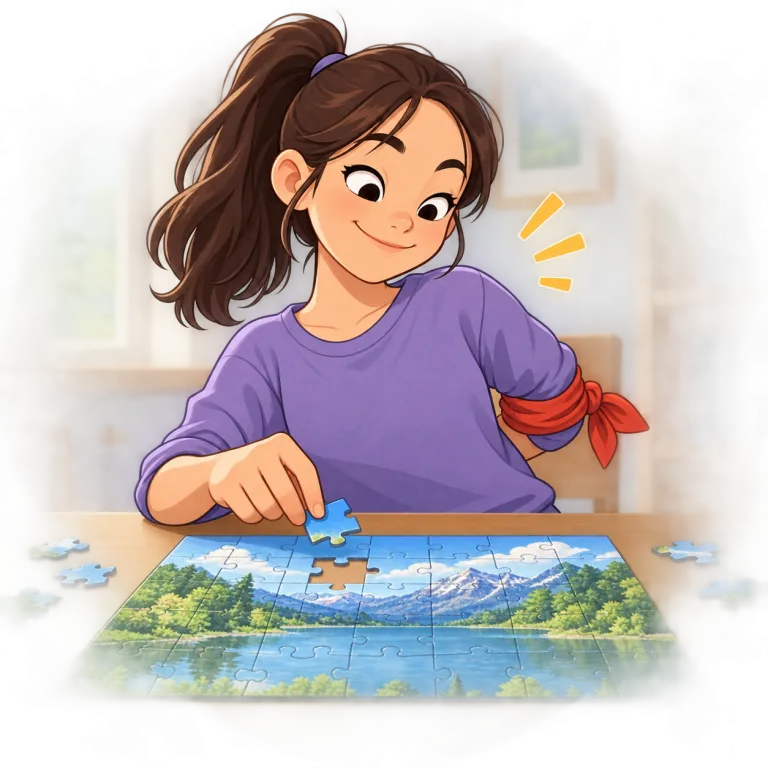
with one hand tied behind one's back
楽々と
解説 Definition
字面では「with one hand tied behind one's back」という身体的な場面を思わせるが、比喩では「楽々と」ことを表す。会話、記事、仕事上の説明などで、直訳よりも状況や態度を短く評価する時に使う。文脈によりユーモア、批判、親しみの含みが出る。
Literally, 'with one hand tied behind one's back' creates a concrete image from the words themselves. As an idiom, it means '楽々と' in natural English use. It is used to describe a situation, person, or attitude, not to give a literal description.
覚え方のコツ Memory Tip
「片手を背中の後ろで縛られた状態で」が字面で、そんな不利な条件でもできるほど簡単だ、という誇張から「楽々と」を表す。one’s は主語に合わせ、she なら behind her back とする。solve や beat、win などとともに、能力差や自信を強調する場面で使う。
Do not memorize 'with one hand tied behind one's back' through a Japanese sound trick. First picture the literal image, then connect its main feature to the figurative meaning. The phrase often works as a compact comment on the whole situation.
例文
She could solve that puzzle with one hand tied behind her back.
彼女ならそのパズルを楽々解けるだろう。
Our team won the match with one hand tied behind its back.
私たちのチームはその試合に楽々勝った。
He knows the system so well that he can fix it with one hand tied behind his back.
彼はそのシステムを熟知しているので、楽々修理できる。
with one hand tied behind one's back の語源・成り立ち Etymology
由来は多くの場合、身体の動き、見た目、日常観察を人間の行動に重ねた比喩である。厳密な初出よりも、字面の具体像が社会的・心理的な意味へ広がった点が重要である。そのため、聞き手は直訳ではなく、背景にある典型的な場面から慣用的な意味を推測する。
This expression grew from a concrete image connected with 身体 or everyday observation. Over time, that image became a figurative way to talk about human behavior or judgment.
同じレベルの語彙をもっと
外部辞書で調べる
この英熟語をクイズで覚えよう