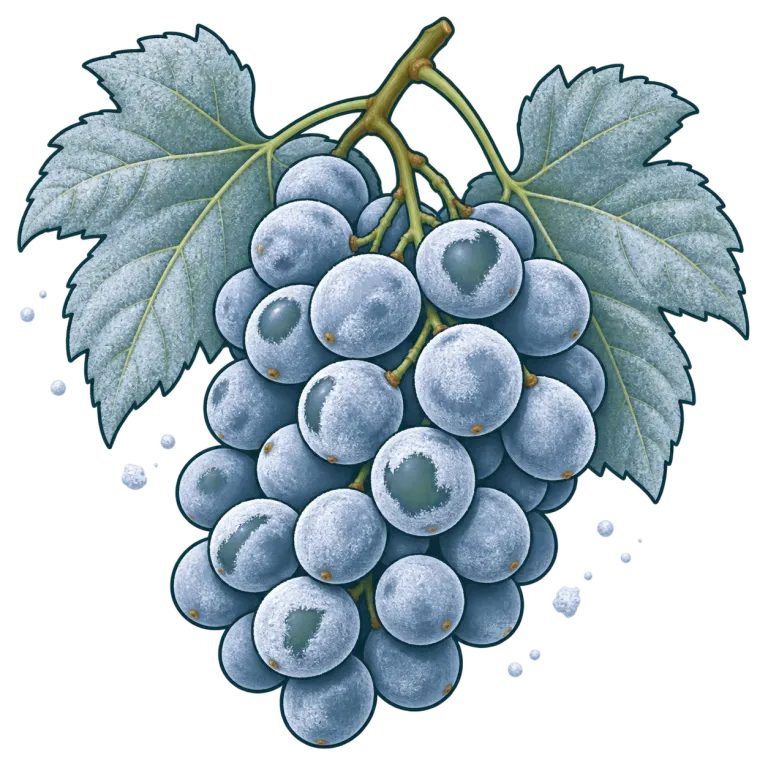
青白い、灰青色の、白い粉を帯びた
解説 Definition
葉や果実、鳥の羽などが、淡い青緑色や灰青色を帯び、白い粉をふいたように見える状態を表す形容詞。植物学でよく使われ、単に白っぽいだけでなく、青みや緑みを含んだくすんだ色合いと粉状の質感を伴うことが多い。
Glaucous means having a pale blue-green or gray-blue color, often with a soft, whitish, dusty look on the surface. It is commonly used in botany and biology to describe leaves, stems, fruits, or animals. The word is more technical than everyday English.
覚え方のコツ Memory Tip
植物図鑑や鳥類図鑑で見たら、「つやのある緑」ではなく「青みを帯びた灰色が白く曇る」絵を頭に置くと覚えやすい語です。glaucous leaves, glaucous berries のように、葉や果実の表面にうっすら粉やロウをまとった場面で出やすいです。単なる pale や whitish では弱く、bluish-gray だけでも足りません。“青灰色+白粉っぽい質感”が一緒に来る、とまとめて覚えると他語と混同しにくくなります。
Do not remember `glaucous` as just pale or just blue. It usually suggests a bluish-gray color with a whitish, dusty, or waxy surface. Think of plant leaves or berries that look lightly covered with powder.
例文
The glaucous leaves had a silvery appearance.
その青白い葉は銀色がかった見た目をしていた。
The plant's glaucous coating protects it from water loss.
その植物の白い粉を帯びた被膜は、水分が失われるのを防ぐ。
Grapes have a glaucous bloom on their skin.
ブドウの表面には、白い粉をふいたような被膜がある。
glaucous の類義語・関連語
glaucous の語源・成り立ち Etymology
glaucous はギリシャ語 glaukos「青白く光る・灰青色の」を、ラテン語 glaucus 経由で受けた語です。語幹 glauc- が「白粉を帯びた青白さ」を表すため、葉や果実の白っぽい粉をふいた感じの意味につながります。関連語に glaucoma、glauc- があります。
Glaucous comes from Greek glaukos, meaning something like "bluish-gray," "pale blue," or "gleaming." It passed into Latin as glaucus and then into English. The meaning developed toward the idea of a pale, powdery blue-gray look, especially on leaves or fruit. Related forms appear in words such as glaucoma.
同じレベルの語彙をもっと
外部辞書で調べる
この英単語をクイズで覚えよう