構成主義心理学
noun 名詞意識的経験を感覚や感情などの基本要素に分け、その構造を内観によって分析しようとした初期心理学の学派を指す。言語や文化の関係体系を研究する人文・社会科学上の構造主義とは区別される。
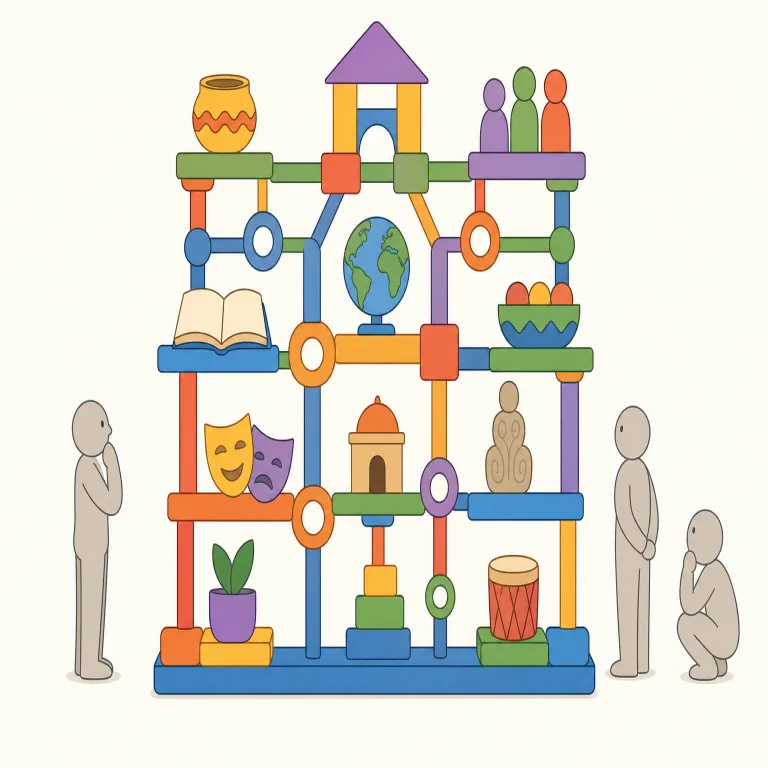
人文科学および社会科学の思想的潮流で、言語、文化、社会などの構造的な相互関係を分析の中心とする理論的枠組み。特に20世紀に影響力を持った。
Structuralism is an approach to studying language, culture, literature, or society by looking at the systems and relationships that shape them. It focuses less on individual parts alone and more on how those parts fit into a larger structure. The word is mainly used in academic subjects such as linguistics and literary theory.
まず structural を見て「structure(構造)」の形容詞だと押さえ、-ism は「主義・考え方」。つまり structuralism は「個々の要素をばらばらに見るのでなく、要素どうしの関係が作る全体の仕組みを重視する立場」とまとめると覚えやすいです。単語単体より文法体系、作品一つより物語の型、文化現象一つより背後のパターンを見る発想を連想すると定着します。
Break it into `structural` + `-ism`. `-ism` often means a system of thought, so `structuralism` is a way of thinking based on `structure`. To remember it, think: not single pieces by themselves, but the pattern made by how the pieces connect.
Structuralism was influential in literary criticism.
構造主義は文学批評に影響力を持っていた。
She studied structuralism in her anthropology course.
彼女は人類学の講座で構造主義を学んだ。
Structuralism emphasized the importance of underlying systems.
構造主義は背後にある体系の重要性を強調していた。
文脈によって、次の意味でも使われます。
意識的経験を感覚や感情などの基本要素に分け、その構造を内観によって分析しようとした初期心理学の学派を指す。言語や文化の関係体系を研究する人文・社会科学上の構造主義とは区別される。
structuralism は structural + -ism で、structure はラテン語 struere「組み立てる」に由来します。要素そのものより関係や配置を重視する立場だと分かるので、「構造主義」は名前に発想が出ています。structure、construct が関連語です。
"Structuralism" was formed from "structural" and the suffix "-ism." Its root is "structure," from Latin "struere," meaning to build or arrange. The word came to name an approach that focuses less on single parts and more on how parts are organized in a system. Related words include "structure" and "construct."
この英単語をクイズで覚えよう