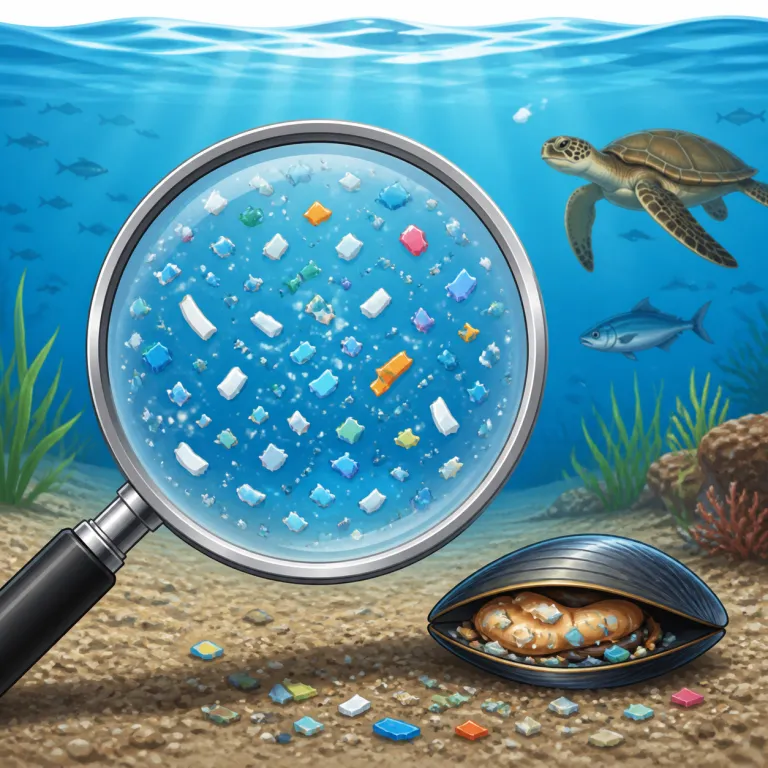
マイクロプラスチック
解説 Definition
プラスチック粒子。水環境に存在する極めて小さなプラスチック粉砕物で、生態系に害をもたらす。
Microplastics are extremely small pieces of plastic found in water, soil, air, and living things. They usually come from the breakdown of larger plastic items or from products that contain tiny plastic particles. The word is common in environmental science and discussions about pollution.
覚え方のコツ Memory Tip
micro- は microscope や microwave でも見かける「とても小さい」。plastic はそのまま分かるので、まず「極小の plastic が水や海に広がっている状態」と絵で結ぶと残りやすいです。環境ニュースでは ocean, water, pollution, waste と一緒に出やすく、microplastics in the ocean のまとまりで覚えると実戦的。語尾の -s はふつう複数で、1粒なら a microplastic。単なる plastic waste より「目に見えない細かさが問題」というニュアンスが強い語です。
Split it into `micro-` and `plastics`. `Micro-` means very small, like in `microscope`, so the word suggests tiny pieces of plastic. It is often used in environmental phrases such as `microplastics in the ocean` or `microplastics in water`. Remember that the plural form is common because people usually talk about many tiny pieces.
例文
Microplastics are found in ocean water and marine life.
マイクロプラスチックは海水と海洋生物に見られる。
Scientists are studying the effects of microplastics on human health.
科学者はマイクロプラスチックが人間の健康に及ぼす影響を研究している。
Reducing plastic waste is essential to prevent pollution from microplastics.
マイクロプラスチック汚染を防ぐためにプラスチック廃棄物を減らすことが重要である。
microplastics の類義語・関連語
紛らわしい語
microplastics の語源・成り立ち Etymology
ギリシャ語 mikros(小さい)と英語 plastics(プラスチック)の合成語。plasticsはギリシャ語 plastikos(成形できる)に由来。micro-は「極めて小さい」を表す接頭辞。関連語: microscope(顕微鏡)、plastic(可塑性の)。5mm以下の微細なプラスチック片を指す比較的新しい造語。
Microplastics is a modern compound made from micro- and plastics. Micro- comes from Greek mikros, meaning "small," and plastic goes back through Greek plastikos, meaning "able to be shaped." The word was created to describe extremely small pieces of plastic, and it shares roots with words like microscope and plasticity.
同じレベルの語彙をもっと
外部辞書で調べる
この英単語をクイズで覚えよう