ナフサ
解説 Definition
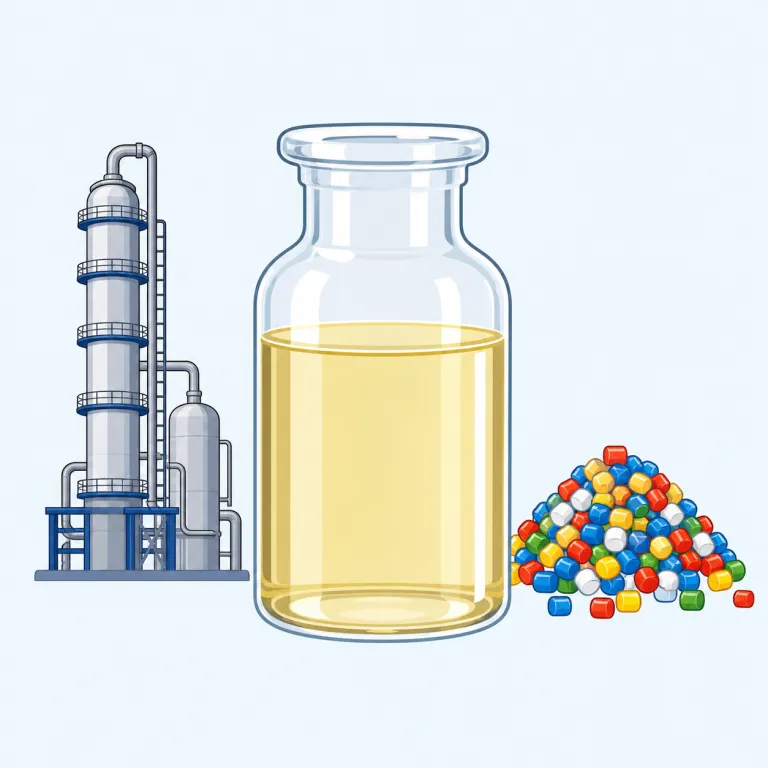
石油などから得られる揮発性の液体炭化水素の混合物です。沸点範囲は種類により幅がありガソリンと重なることもあり、工業用溶剤・燃料・石油化学原料として使われます。
Naphtha is a light liquid made from petroleum or coal tar. It is mainly used as a raw material in the chemical industry or as a fuel in some products. This word is mostly used in science, energy, and industrial contexts.
覚え方のコツ Memory Tip
日常英語として単独で覚えるより、「石油化学の原料名」として場面ごと覚えると定着します。ニュースや化学でよく見るのは naphtha cracker(ナフサ分解装置), petrochemical feedstock などで、gasoline のような最終製品名というより「工場で次の製品を作るための揮発性石油成分」という位置づけを押さえるのがコツです。kerosene や diesel と違って、生活燃料より化学原料の文脈で出やすい語。naphthalene や napalm など石油系の仲間語とまとめて覚えると記憶に残ります。
Remember `naphtha` as an industry word, not an everyday fuel word. It often appears in phrases like `naphtha cracker` or `petrochemical feedstock`, so connect it with factories and chemical production. That helps separate it from more familiar words like `gasoline`, `diesel`, or `kerosene`.
例文
The refinery produces naphtha as a byproduct of crude oil processing.
その製油所は原油精製の副産物としてナフサを生産している。
Naphtha is used as a solvent in various chemical processes.
ナフサはさまざまな化学工程で溶剤として使用されている。
The flammability of naphtha requires careful handling and storage.
ナフサは引火性が高いため、取り扱いや保管には注意が必要である。
naphtha の類義語・関連語
類義語
紛らわしい語
naphtha の語源・成り立ち Etymology
naphtha はラテン語・ギリシャ語を経て、さらに古代イラン語系の naft(石油、しみ出る油)にさかのぼる語です。もともと「地中から出る燃えやすい油」の感覚があり、今のナフサの意味にそのままつながります。関連語は naphthalene, napalm。
Naphtha came into English through Latin and Greek, but its deeper source is an ancient Iranian word like naft, meaning oil or petroleum. It originally referred to natural, flammable oil coming from the ground. That early idea of seeped earth-oil later developed into the modern chemical sense. Related words include naphthalene and napalm.
同じレベルの語彙をもっと
外部辞書で調べる
この英単語をクイズで覚えよう