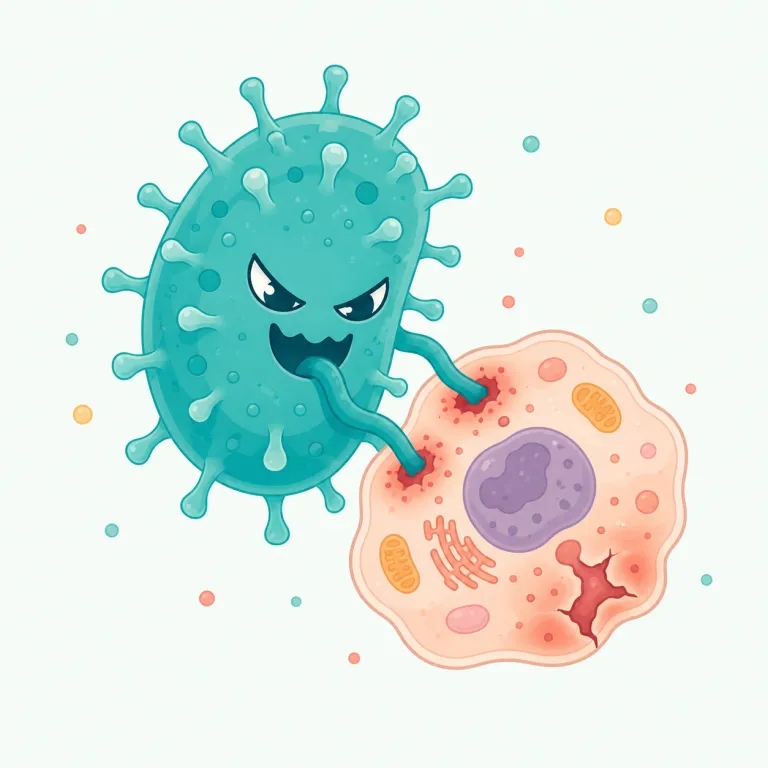
病原性
解説 Definition
病原性は病気を引き起こす能力です。微生物の危険性を示す特性を指します。
Pathogenicity is the ability of a virus, bacterium, or other organism to cause disease. It is a scientific term used in medicine and biology when comparing how harmful different organisms are. A higher pathogenicity means it is more likely to make people or animals sick.
覚え方のコツ Memory Tip
pathogen(病原体)と pathogenic(病気を起こす)を先に押さえると覚えやすい語です。語尾の -ity は「性質・度合い」を表すので、pathogenicity は「病気を起こす性質そのもの」。単に菌やウイルスが“いる”ことではなく、“どれだけ病気を起こしうるか”を見る語だと意識すると定着します。infectivity が感染の広がりやすさ、virulence が症状の強さ寄りなのに対し、pathogenicity は発病させる能力の有無・性質に焦点があります。
Start with `pathogen` and `pathogenic`, then add `-ity`, which often means a quality or state. That makes `pathogenicity` easier to remember as the quality of being pathogenic. It helps to compare it with related science words: `infectivity` is about spreading, while `pathogenicity` is about causing disease at all.
例文
The pathogenicity of the virus varies among strains.
ウイルスの病原性は株によって異なります。
Understanding pathogenicity helps develop treatments.
病原性を理解することは治療開発に役立ちます。
The pathogenicity of the bacteria was tested.
バクテリアの病原性がテストされました。
pathogenicity の類義語・関連語
pathogenicity の語源・成り立ち Etymology
pathogenic に名詞語尾 -ity が付いた語で、ギリシャ語 pathos「苦しみ・病」と -gen「生み出す」が核。pathogen や gene と同系で、「病気を生み出す性質」という形がそのまま『病原性』の意味になっている。
This word was formed in English from pathogenic + the noun ending -ity. Pathogenic comes from Greek roots: pathos, meaning "suffering" or "disease," and -gen, meaning "producing" or "giving birth to." So the word originally meant the quality of causing disease. Related English words include pathogen and gene.
同じレベルの語彙をもっと
外部辞書で調べる
この英単語をクイズで覚えよう