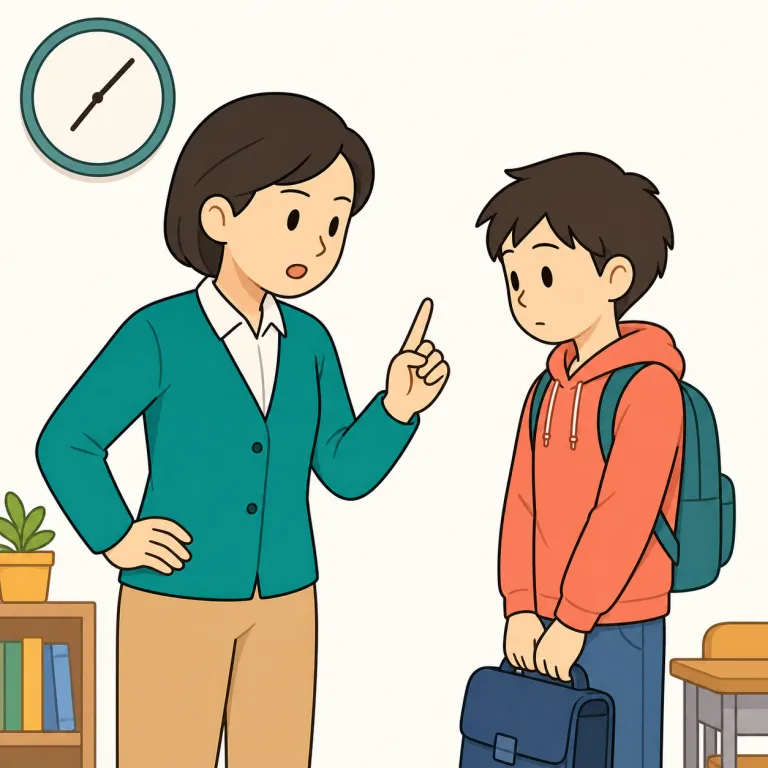
叱責
解説 Definition
叱責は、誰かの悪い行動に対して不承認を示し、叱ったりたしなめたりすることを意味します。深刻な処罰や激しい怒りより、比較的軽い言葉による注意を表すことが多いです。
Chiding is the act of criticizing or scolding someone in a mild way. It usually suggests disapproval, but it is often less harsh than serious punishment or anger.
覚え方のコツ Memory Tip
まず chide を核にして、chiding はその -ing 形で「しかること・小言」と整理すると覚えやすいです。動作名詞なので、1回の行為やその場の叱責を思い浮かべると定着します。shout のように大声で怒鳴る感じより、悪い行動をたしなめる verbal correction に近い語です。give someone a chiding, get a chiding from a teacher の形で覚えると実戦的。criticism より人に直接向ける叱りつけ感があり、scolding と近いがやや語彙的で文章寄り、と押さえると混同しにくいです。
First remember the verb `chide`, then `chiding` is the act of doing that. The `-ing` form helps you think of a moment of scolding or correction. It is usually more like telling someone off than shouting angrily.
例文
The student accepted the teacher's chiding for repeatedly arriving late.
その生徒は、度重なる遅刻に対する先生の叱責を受け入れました。
She received a chiding from her mother for not finishing her homework.
彼女は宿題を終えなかったことで母親から叱責を受けました。
The team listened silently to the coach's chiding after the poor performance.
ふがいない試合のあと、チームはコーチの叱責を黙って聞きました。
chiding の類義語・関連語
類義語
派生語
chiding の語源・成り立ち Etymology
chidingは古英語cidan「言い争う、文句を言う」に由来するchideの名詞的用法。関連語はchideやchiderで、もとは口論する語だったものが、相手にきつく言葉を浴びせる感じから「叱責」という意味に落ち着いた。
Chiding comes from the verb chide, which goes back to Old English cidan, meaning to argue, complain, or scold. The word first had a broader sense of verbal quarrelling. Later it settled into the narrower idea of harsh speaking or scolding, seen also in chide and chider.
同じレベルの語彙をもっと
外部辞書で調べる
この英単語をクイズで覚えよう