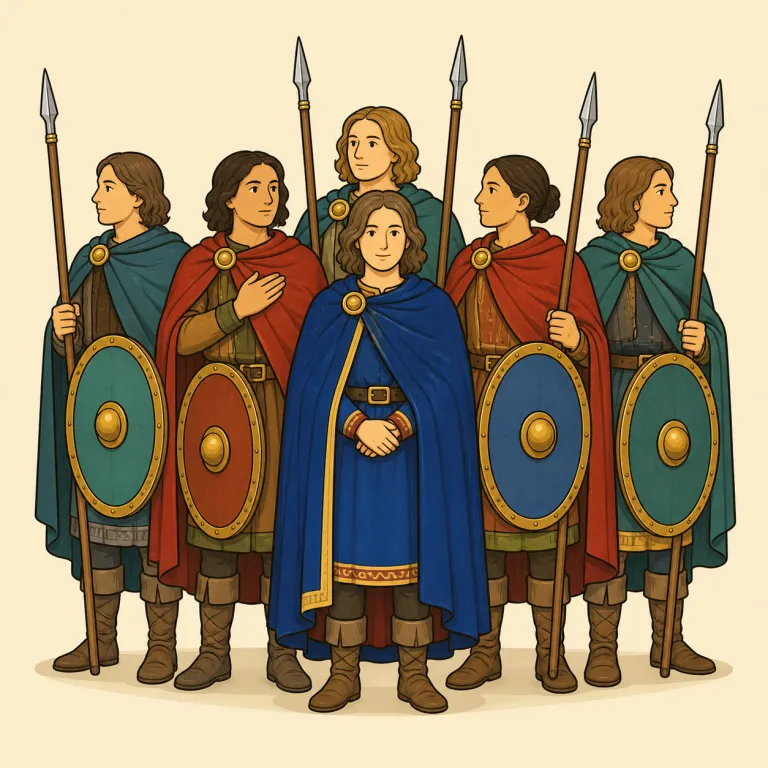
中世の武装従士団
解説 Definition
ローマの皇帝またはゲルマン民族の支配者に従う武装護衛団。中世ヨーロッパでは、主君と従士間の忠誠関係の中核となり、特別な地位と特権が与えられた。
A group of armed followers or companions who supported and protected a leader, especially in early medieval history. The word is mainly used in historical and academic writing.
覚え方のコツ Memory Tip
com- は company, companion など「いっしょに行動する」語の仲間だと押さえ、そこに「主君のすぐそばにいる武装の一団」という絵を重ねると覚えやすいです。単なる army ではなく、王・皇帝・首長に密着して従う guard / retinue で、忠誠と特権がセットの集団というのが核。committee や community のような非軍事的な集まりと混同せず、「支配者の近衛・従士団」をまず固定すると意味がぶれません。
The beginning `com-` can remind you of words about being together, like `companion` or `company`. Picture a group of armed men staying close to a ruler, not a general army far away. That image helps fix `comitatus` as a loyal ruler’s retinue or war band.
例文
A comitatus was an elite armed retinue.
コミタトゥスは精鋭の武装従士団だった。
The emperor's comitatus protected him.
皇帝のコミタトゥスは皇帝を護衛した。
Comitatus members had special privileges.
コミタトゥスの構成員には特権があった。
comitatus の類義語・関連語
comitatus の語源・成り立ち Etymology
ラテン語 comitatus「随行団・従者団」に由来し、さらに comes「同行者」へさかのぼります。comes は com-「共に」+ ire「行く」で、『一緒に行く人々』から首長に従う武装従士団の意味になりました。関連語は count, county。
Comitatus comes directly from Latin, where it meant a group of companions or attendants. It comes from comes, meaning "companion," built from com- "with" and ire "to go." The basic idea was people who go together, and this later became the name for a chief's armed followers or retinue. Related English words include count and county, which come from the same Latin family.
同じレベルの語彙をもっと
外部辞書で調べる
この英単語をクイズで覚えよう