針葉樹の
解説 Definition
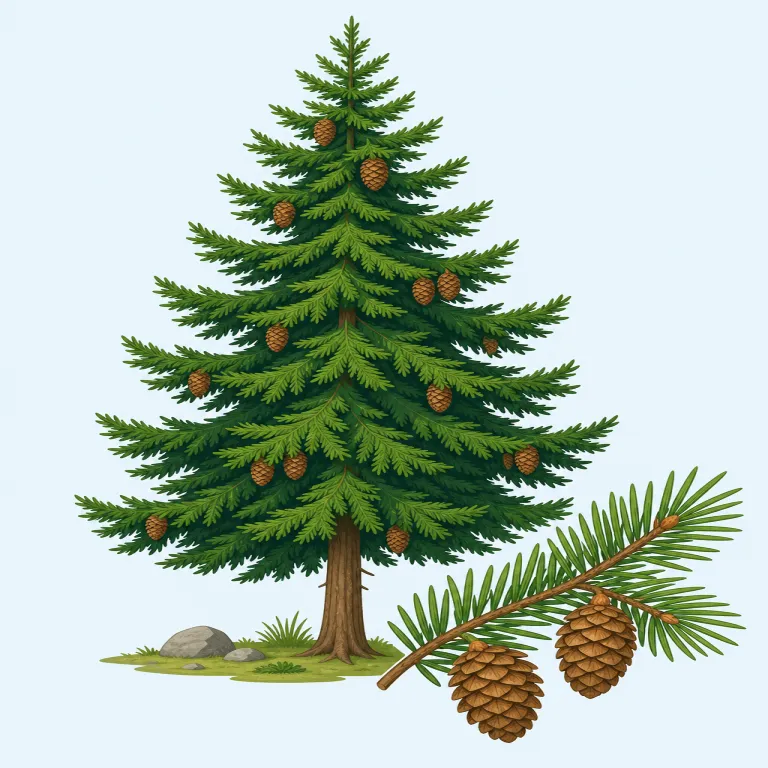
針やスケール状の葉を持つ樹木。マツ、スプルース、モミなどが典型的で、通常、円錐形の実(松ぼっくり)をつけます。
Coniferous describes trees or forests made up of cone-bearing trees such as pine, fir, and cedar. It is often used in science, geography, and nature writing. These trees usually have needles instead of broad leaves and often stay green all year.
覚え方のコツ Memory Tip
まず conifer をひとかたまりで覚えると楽です。よりやさしい英語の cone(円すい、松ぼっくり)を思い出せれば、「cone をつける木」→針葉樹、という像が作れます。実際には coniferous forest、coniferous tree の形でよく出るので、単語単体より「針葉樹林」「針葉樹の木」という場面ごと覚えるのが有効です。対になる deciduous(落葉樹の)と並べると、冬でも葉が残る側の語として整理しやすく、-ous は形容詞語尾だと意識すると名詞 conifer との対応も崩れません。
Start with `conifer`, then notice the simple word `cone` inside it. That can help you picture trees with cones, like pines. `Coniferous` is the adjective form, so it often appears in phrases like `coniferous forest` or `coniferous tree`.
例文
Pine and spruce are examples of coniferous trees.
松とトウヒは針葉樹の例です。
Coniferous forests cover large areas in northern regions.
北部地域には針葉樹林が広がっています。
Many coniferous trees have needle-shaped leaves.
多くの針葉樹は針状の葉を持っています。
coniferous の類義語・関連語
coniferous の語源・成り立ち Etymology
coniferous はラテン語 conus「円錐」+ ferre「運ぶ・生む」+ -ous から成り、字義は「円錐を実らせる」です。針葉樹が cone をつける木だと分かると意味が直結し、関連語 conifer や aquifer にも同じ「bearing」の感覚が残っています。
From Latin conifer, from conus "cone" and ferre "to bear, carry," with the adjective ending -ous. It originally meant "bearing cones." That is why it came to describe trees that produce cones. Related words include conifer and aquifer, where -fer means "bearing" or "carrying."
同じレベルの語彙をもっと
外部辞書で調べる
この英単語をクイズで覚えよう