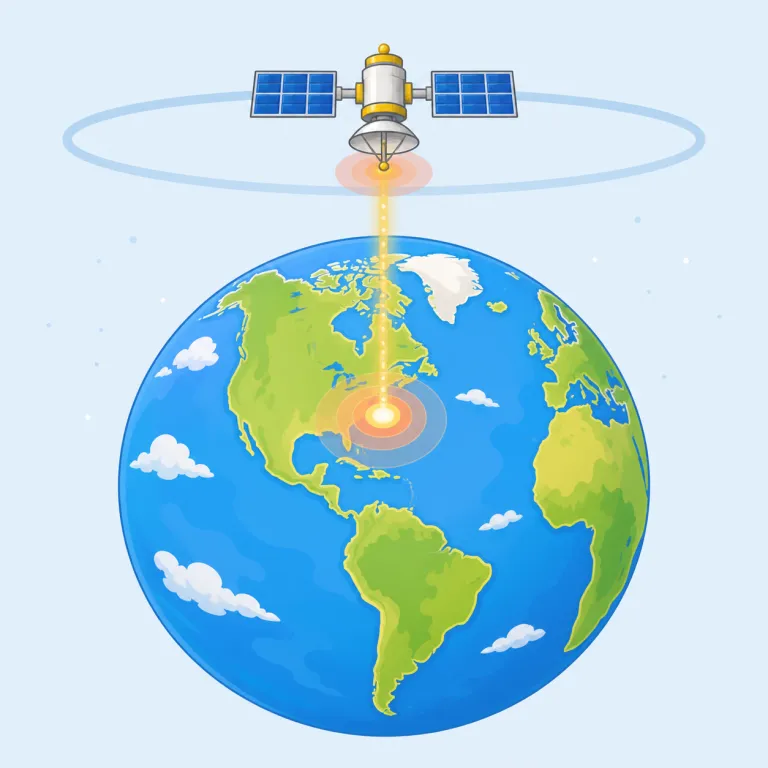
対地同期の
解説 Definition
地球の自転周期と同じ周期で地球を回る軌道や衛星に関する形容詞です。地上から常に同じ位置に見えるとは限らず、赤道上の円軌道など特定の条件を満たす場合に geostationary「対地静止」になります。
Geosynchronous describes an object, usually a satellite, that moves around the Earth in a way that matches the Earth's rotation period. It is mainly used in astronomy and space technology. A geostationary satellite is one special kind of geosynchronous satellite.
覚え方のコツ Memory Tip
geo- は geography と同じ「地球」、synchronous は「時間・動きが同期した」と捉え、地球が1回自転する間に衛星も1周する映像で固定すると覚えやすい。頻出の geosynchronous orbit / satellite とまとめて押さえる。重要なのは「周期が合う」ことで、地上の一点に止まって見えるとは限らない。赤道上の円軌道で静止して見える geostationary は、geosynchronous のうち条件をさらに満たす特別な場合、と区別すると混同しにくい。
Notice `sync` inside `synchronous`, which gives the idea of moving in time together. Add `geo-`, meaning Earth, and you get something that stays in sync with Earth. In space topics, imagine a satellite matching the planet's rotation.
例文
A geosynchronous satellite completes one orbit during each Earth rotation.
対地同期衛星は、地球が1回自転する間に軌道を1周する。
Weather forecasting uses geosynchronous satellites that orbit once per Earth rotation.
天気予報には、地球が1回自転する間に軌道を1周する対地同期衛星が使われる。
The orbit of a geosynchronous satellite matches Earth's 24-hour rotation.
対地同期衛星の軌道周期は、地球の24時間の自転周期と一致する。
geosynchronous の類義語・関連語
geosynchronous の語源・成り立ち Etymology
geosynchronous はギリシャ語 geo-「地球」と syn-「共に」、chronos「時間」をもとにした語です。geography や chronology と同根要素をもち、「地球の自転と時間を合わせる」ので対地同期という意味だと腑に落ちます。
Geosynchronous is built from Greek elements: geo- meaning "earth," syn- meaning "together," and chronos meaning "time." The word was formed to describe something whose timing matches the Earth's motion. Its sense developed from the literal idea of being "in time with the Earth." Related words include geography, synchronize, and chronology.
同じレベルの語彙をもっと
外部辞書で調べる
この英単語をクイズで覚えよう