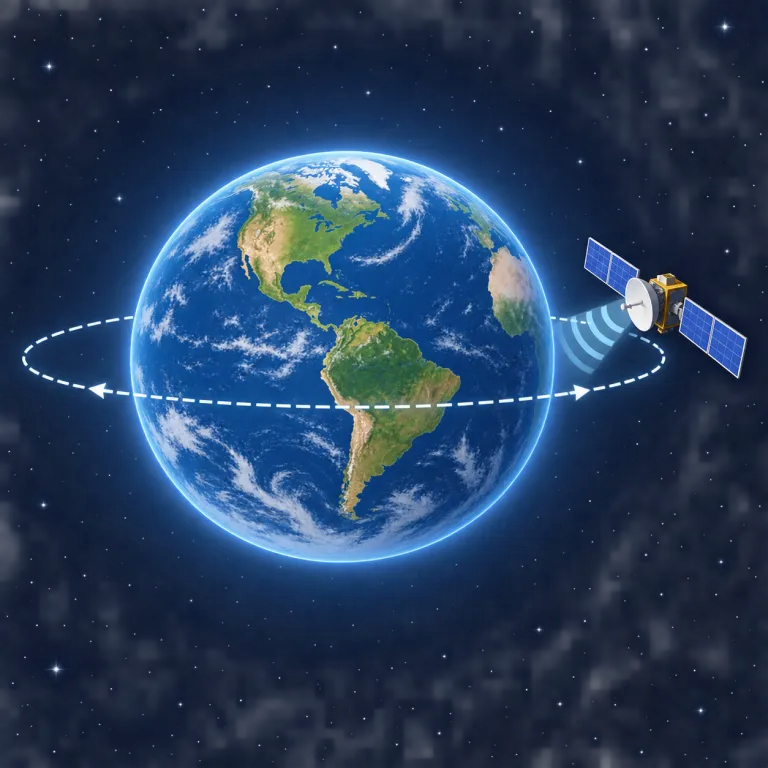
対地静止の
解説 Definition
地球の赤道上空を地球の自転と同じ角速度で公転し、地上から見ると一定の位置に静止しているように見える状態を表す形容詞。主に衛星やその軌道について使い、通信衛星や気象衛星の説明でよく用いられる。
Geostationary describes a satellite or orbit that moves around Earth at the same rate that Earth rotates, so it appears to stay above the same place. The word is mainly used in space science, weather systems, and communications technology.
覚え方のコツ Memory Tip
geo- は geography・geology と同じく「地球」。stationary は station を思い出すと「動かず同じ位置にある」感覚でつかめます。つまり geostationary は「地球に対して stationary」=地上から見ると止まって見える、という組み立て。geostationary orbit / geostationary satellite の形でよく出るのでセットで覚えると強いです。単に宇宙にある衛星ではなく、地球の自転に合わせて見かけ上固定される点が核心です。
Break it into `geo-` and `stationary`. `Geo-` means earth, and `stationary` means staying in one place, so the whole word means "staying in one place relative to Earth." It is easiest to remember in the phrases `geostationary orbit` and `geostationary satellite`.
例文
A geostationary satellite orbits the Earth at the same rate as the planet rotates.
対地静止衛星は地球の自転と同じ速さで地球を周回する。
Weather forecasting relies heavily on data from geostationary satellites.
天気予報は対地静止衛星からのデータに大きく依存している。
The telecommunications company launched a new geostationary satellite to improve coverage.
その通信会社は通信範囲を広げるため、新しい対地静止衛星を打ち上げた。
geostationary の類義語・関連語
geostationary の語源・成り立ち Etymology
「geostationary」はギリシャ語 geo-「地球」と、ラテン語 stare「立つ」由来の stationary が結びついた語です。つまり「地球に対して止まって見える」が原義で、geology や geography の geo-、station や stable の語感を知ると意味が一気に見えます。
Geostationary is built from geo-, from Greek for "earth," and stationary, from Latin stare, "to stand." The basic idea is "appearing to stand still relative to the earth." Related words include geography and geology with geo-, and station and stable from the same Latin root as stationary.
同じレベルの語彙をもっと
外部辞書で調べる
この英単語をクイズで覚えよう