ほつれる、もつれる、(もつれを)ほぐす
解説 Definition
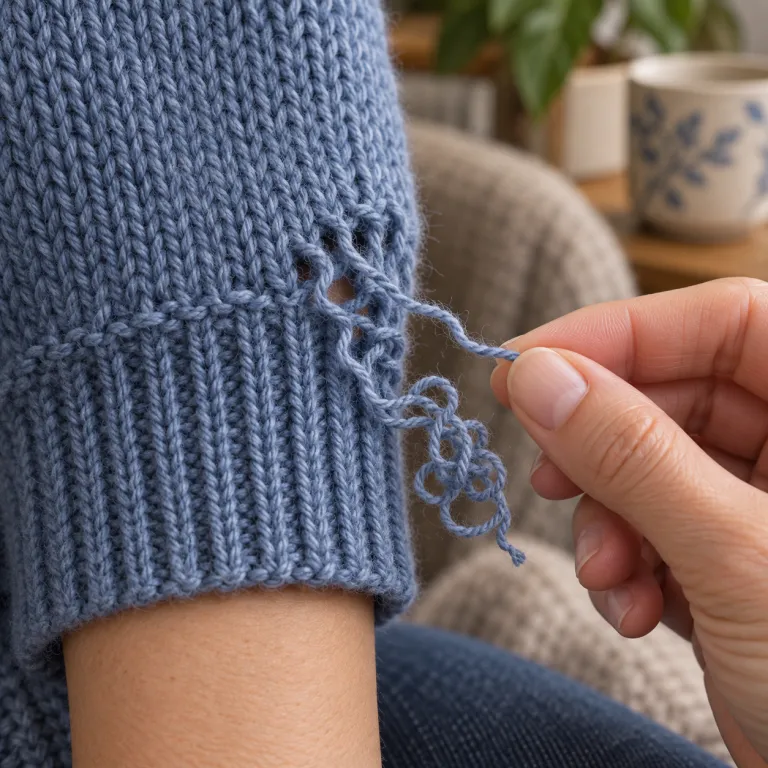
ravel は、布や糸の端がほどけてほつれること、ひもや髪などがもつれて絡まること、またそのもつれをほぐすことを表す語。文脈によって「乱れる」側と「解く」側の両方の意味で使われるため、対象や前後関係を見て判断する必要がある。
To ravel means to become twisted, tangled, or pulled apart into loose threads, or to make something like this. It is often used for cloth, rope, or hair. In some contexts, it can also mean to untangle, so the exact meaning depends on usage.
覚え方のコツ Memory Tip
ravel はまず unravel を知っていると覚えやすい語です。unravel が「もつれをほどく」なので、核には「糸・ひも・話がこんがらがる/その絡みを扱う」感覚があると置くとよいです。布の端が ravel なら「ほつれる」、hair や threads が ravel なら「もつれる」。文脈によって「乱れる」と「ほぐす」の両方が出る珍しい語なので、主語と目的語を必ず確認するのが記憶のコツです。
This word is easier if you already know `unravel.` Both words connect to the image of threads, hair, or stories getting tangled. With `ravel`, always check the context carefully, because it can mean becoming tangled or undoing the tangle.
例文
The sweater started to ravel at the cuff.
そのセーターは袖口からほつれ始めた。
The loose threads raveled in the wash.
洗濯中にゆるんだ糸がほつれた。
He watched the fishing line ravel into a tight knot.
彼は釣り糸が固く絡まり、結び目になるのを見ていた。
ravel の類義語・関連語
紛らわしい語
ravel の語源・成り立ち Etymology
ravelはオランダ語ravelen「糸がほつれる」が英語に入った語で、布の端が乱れてほどける感覚が核です。明確な分解は乏しいですが、unravelは同語にun-が付いた関連語で、「もつれを解く」という対照的な意味になります。
Ravel probably came into English from Dutch ravelen, meaning "to fray" or "come apart in threads." Its earliest sense was about cloth or fibers loosening at the edge. From that image, it later came to be used for things becoming tangled or confused. Unravel is a closely related English word built from the same base.
同じレベルの語彙をもっと
外部辞書で調べる
この英単語をクイズで覚えよう