ケイ酸塩
解説 Definition
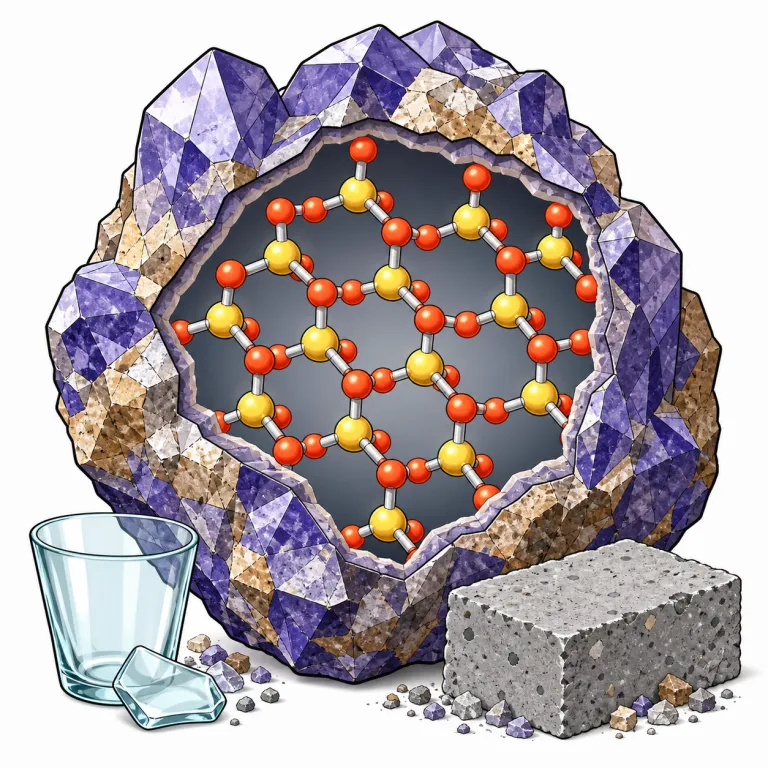
ケイ素と酸素からなる陰イオンを含む塩の総称。多くの岩石や鉱物の主要成分で、ガラスやセメントなどにも利用される。
A silicate is a salt containing an anion composed of silicon and oxygen, usually combined with metal ions or other elements. Silicates are major components of many rocks and minerals and are also used in materials such as glass and cement. The word is mainly used in chemistry and geology.
覚え方のコツ Memory Tip
silicon(シリコン)や silica(シリカ)を知っていれば、silicate は『それらを成分にもつ化合物グループ』とまとめて覚えると定着しやすいです。化学でよく見る語尾 -ate は sulfate, nitrate のように「塩・化合物名」に多い型なので、その仲間として見るのも有効。岩石・鉱物・粘土・ガラス・セメントの説明に出たら silicate を疑う、という使用場面で覚えると強いです。単体元素の silicon や樹脂の silicone と混同せず、『酸素と結びついた鉱物側の語』と区別すると整理しやすくなります。
Connect it to `silicon` and `silica`, which share the same beginning. The ending `-ate` is common in chemistry words like `sulfate` and `nitrate`, so it helps you remember this is a compound name. Think of rocks, minerals, glass, or cement when you see `silicate`.
例文
Silicate minerals are found in many types of rocks.
ケイ酸塩鉱物は多くの種類の岩石に含まれています。
Silicates are important ingredients in glass and cement.
ケイ酸塩はガラスやセメントの重要な原料です。
The geologist identified several silicates in the ore sample.
地質学者は鉱石試料から数種類のケイ酸塩を特定しました。
silicate の類義語・関連語
silicate の語源・成り立ち Etymology
silicate は silica + -ate でできた語です。silica は近代ラテン語を経てラテン語 silex, silicis「火打ち石」にさかのぼり、関連語に silicon と silica があるので、「石のような硬い成分をもつ塩」からケイ酸塩の意味になったと分かります。
Silicate is formed from silica and the suffix -ate, often used in chemical names. Silica comes from modern Latin, based on Latin silex or silicis, meaning "flint" or "hard stone." From that stone-related root, silicate came to mean a compound containing silica. Related words include silica and silicon.
同じレベルの語彙をもっと
外部辞書で調べる
この英単語をクイズで覚えよう