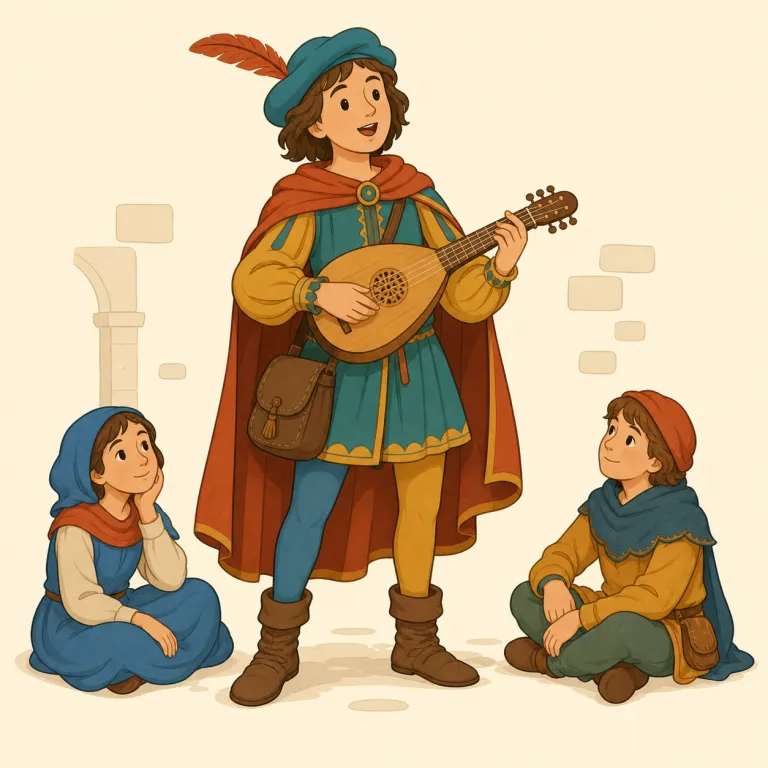
シンガーソングライター、フォーク歌手
noun 名詞現代の文学的・報道的な表現で、詩的・物語的な自作曲を歌う歌手を指すことがある。中世の宮廷詩人そのものではなく、作品の語り手としての性格を強調してシンガーソングライターやフォーク歌手を呼ぶ文学的な呼称である。
吟遊詩人とは、中世ヨーロッパで宮廷や城から城へと移動して、歌や詩を演じる芸人です。恋愛や冒険をテーマにした物語を作曲・演奏する職業音楽家でした。
A troubadour was a poet and singer in the Middle Ages, especially in southern Europe, who performed songs about love and other themes. In modern use, it can also mean a traveling singer-songwriter or performer with a romantic or artistic image. The word often has a historical or literary feeling.
troubadour は bard(詩人・吟遊詩人)や minstrel に近い仲間として覚えると定着しやすい語です。まず頭に置く絵は「中世の宮廷や城を渡り歩き、恋や冒険を歌う singer-poet」。現代の単なる singer ではなく、歌い手+語り手+作り手が一体になった存在です。a wandering troubadour, medieval troubadours のような形で見たら、その場で演じながら旅する人物像を思い出すとよいです。つづりは trouble に似て見えますが無関係なので、そこで引っぱられないよう注意します。
Remember it with `bard` or `minstrel`: they are close word-friends. A troubadour is not just a singer, but a traveling singer-poet in a medieval setting. Picture someone moving from castle to castle, singing stories of love or adventure.
The troubadour sang romantic ballads in the royal court.
その吟遊詩人は王宮でロマンティックなバラッドを歌いました。
Medieval troubadours traveled throughout Europe performing their compositions.
中世の吟遊詩人はヨーロッパ中を旅しながら自作の曲を披露しました。
The troubadour's poem told of a knight's adventure and love.
その吟遊詩人の詩は、騎士の冒険と恋を物語っていました。
文脈によって、次の意味でも使われます。
現代の文学的・報道的な表現で、詩的・物語的な自作曲を歌う歌手を指すことがある。中世の宮廷詩人そのものではなく、作品の語り手としての性格を強調してシンガーソングライターやフォーク歌手を呼ぶ文学的な呼称である。
troubadour は古オック語 trobador「詩を作る人」からフランス語を経て英語に入りました。語源の trobar は“見つける・作り出す”の意で、言葉や旋律を工夫して生み出す人という感覚から「吟遊詩人」になりました。関連語は trope, trouvère です.
Troubadour came into English through French from Old Occitan trobador. It is related to the verb trobar, meaning "to find" or "to compose." The idea was of someone who creates or invents songs and verses, so the word came to mean a lyric poet-singer; it is related to trouvère.
この英単語をクイズで覚えよう