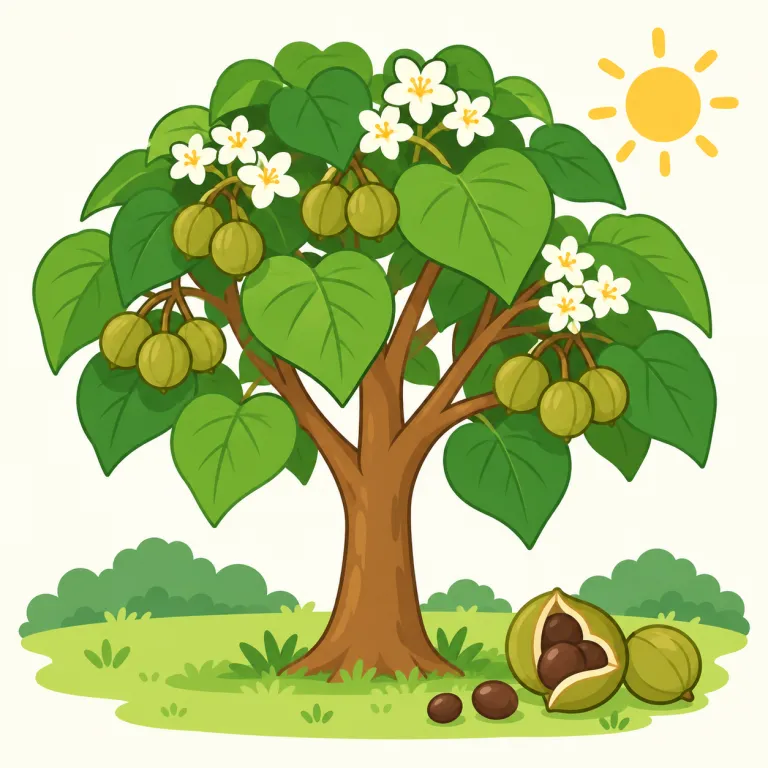
アブラギリ
解説 Definition
アブラギリ属、特に種子から桐油を採る木を指します。単独よりも tung tree(アブラギリ)や tung oil(桐油)という形でよく使われます。
A tung tree, especially a tree of the genus Vernicia whose seeds yield tung oil. The noun is most commonly encountered in the compounds tung tree and tung oil rather than as an independent everyday name for the plant.
覚え方のコツ Memory Tip
tung は中国語の「桐」に由来する植物名で、英語では単独より tung tree「油桐」や tung oil「桐油」の組み合わせで覚えるのが実用的です。種子から採れる油が木材の仕上げや防水に使われる木を思い浮かべましょう。日本語の一般的な「桐」と英語の paulownia を機械的に同一視しない点にも注意が必要です。
Learn tung through the fixed combinations tung tree and tung oil. The tree produces seeds from which a quick-drying oil is obtained for protective finishes and waterproof coatings. This practical association is more useful than memorizing tung as an isolated plant name. The English word was borrowed from Chinese, so its spelling does not break naturally into familiar English prefixes or suffixes. Also be careful with translation: although the source character can be rendered broadly as “桐,” the tung tree is not simply identical to every tree called kiri in Japanese, and paulownia is a different English plant name.
例文
The tung tree produces seeds that are rich in oil.
アブラギリは油を多く含む種子をつけます。
Tung oil is used in protective finishes for wood.
桐油は木材を保護する仕上げ剤に使われます。
tung の類義語・関連語
類義語
派生語
紛らわしい語
tung の語源・成り立ち Etymology
tung は19世紀に中国語の 桐 tóng から英語に入った植物名です。もとは種子から油をとる木を指し、tung oil と結びついて広まったので、「桐の木」という具体物がそのまま語になったと考えると意味がつかみやすいです。関連語は tung oil, tung tree.
Tung entered English in the nineteenth century from a Chinese word represented by the character 桐 and referring in this context to the oil-producing tree. The borrowing became established largely through trade in tung oil, which is pressed from the tree’s seeds and used as a drying oil. Because tung is a direct plant-name borrowing rather than a word built from English elements, its modern compounds, especially tung tree and tung oil, best preserve its history and meaning.
同じレベルの語彙をもっと
外部辞書で調べる
この英単語をクイズで覚えよう