母獣、雌親
noun 名詞馬・牛・犬などの動物について、その個体を産んだ雌の親を指します。主に畜産、繁殖、血統を扱う場面で用いられ、人間の母親には使いません。雄の親を表す sire と対になる語です。
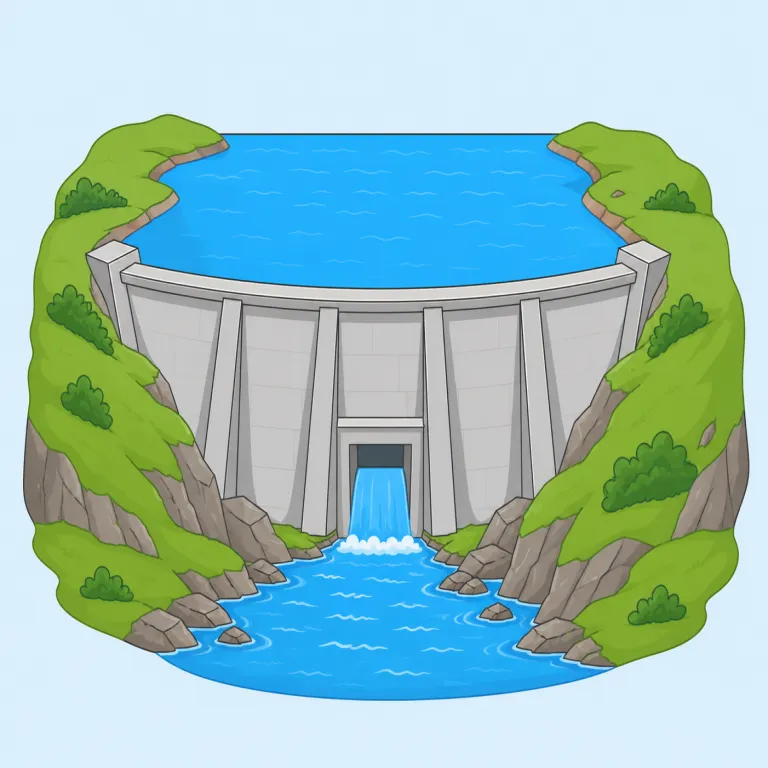
水や流体をせき止めるための構造物。川などの水の流れを制御し、貯水や発電などに用いられます。
A dam is a large structure built across a river to stop or control the flow of water. Dams are used to store water, prevent floods, or produce electricity. The word is mainly used in geography, engineering, and environmental topics.
dam は日本語の「ダム」と形も音もほぼ同じなので、まずここが最大の記憶フックです。そのうえで「水をただ集める場所」ではなく、「流れをせき止めて control する壁状の構造物」とイメージすると定着しやすくなります。文脈では build a dam, a hydroelectric dam, the dam burst などが頻出。lake や reservoir は水そのもの・貯水池側、dam はそれをせき止める“構造物”だと切り分けると混同しにくいです。
Remember dam as the structure, not the water itself. A lake or reservoir is the water area, but a dam is the wall that stops and controls the flow. Phrases like "build a dam" or "the dam burst" make the image easy to keep.
The dam blocks the flow of the river.
そのダムは川の流れをせき止めています。
They built a new dam to save water.
彼らは水をためるために新しいダムを造りました。
The dam supplied electricity to the city.
そのダムは都市に電力を供給していました。
文脈によって、次の意味でも使われます。
馬・牛・犬などの動物について、その個体を産んだ雌の親を指します。主に畜産、繁殖、血統を扱う場面で用いられ、人間の母親には使いません。雄の親を表す sire と対になる語です。
dam は中英語を経て、オランダ語・低地ドイツ語系の dam「せき止める構造物」に由来するゲルマン系の語です。水の流れを止める壁そのものを表す、意味の芯がぶれない単語です。関連語は Dutch dam, German Damm。
Dam came into English from Middle English, from a Germanic word also seen in Dutch dam and German Damm. From the beginning, it meant a barrier built to hold back water. The meaning has stayed very stable over time, still centered on blocking or controlling a flow. Its close relatives in other Germanic languages show the same idea.
この英単語をクイズで覚えよう