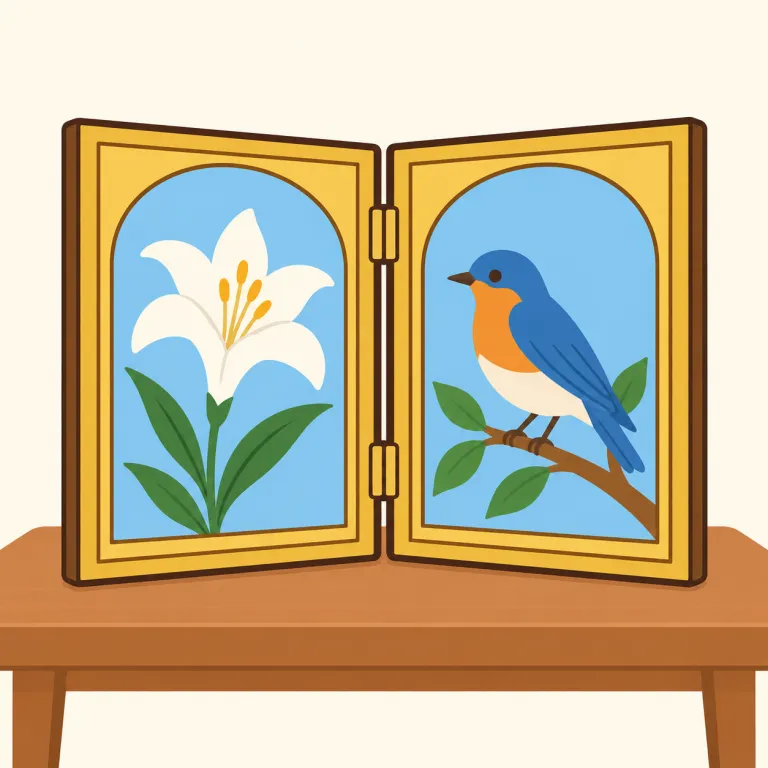
二部作、対作品
noun 名詞小説・映画・音楽作品など、互いに関連する二つの部分または二作品を一組として扱う構成を指す。視覚芸術の二枚組から広がった用法で、二作品の対照や連続性を意識させる場合に使われる。
2つのパネルで構成された美術作品。宗教画から現代美術まで、様々なジャンルで見られる。
A diptych is a work of art made of two parts that are joined together or designed to be shown side by side. It is often used for paintings or photographs, especially in art history and museum contexts. The two parts usually relate closely and create one larger idea.
di- を見たらまず「2」を疑うと覚えると定着しやすい語です。diptych は 1枚絵ではなく、左右2枚が対になって1つの作品として見られるもの。単に絵が2点あるだけでなく、並べて見て意味や対比が出るイメージで押さえると残ります。宗教画の祭壇画だけでなく、写真や現代美術にも使われます。triptych が3連、polyptych が多連なので、この3語を並べて覚えると混同しにくいです。a diptych of photographs のような形も見かけます。
Notice the part `di-`, which often means two. A diptych is a work made of two connected panels, and it often appears in church art, especially in art history. Keep it next to `triptych` in your memory: two panels versus three.
A diptych consists of two panels.
二連祭壇画は2つのパネルで構成されている。
The diptych format allows viewers to compare two related scenes.
二連祭壇画という形式では、鑑賞者が関連する2つの場面を比較できる。
The artist created a diptych for the church's altar.
その芸術家は教会の祭壇のために二連祭壇画を制作した。
文脈によって、次の意味でも使われます。
小説・映画・音楽作品など、互いに関連する二つの部分または二作品を一組として扱う構成を指す。視覚芸術の二枚組から広がった用法で、二作品の対照や連続性を意識させる場合に使われる。
diptych はラテン語 diptycha を経て、後期ギリシャ語 diptykhos「二つ折りの」から来た語です。di-「二」+ ptychē「折りたたみ」で、二枚が折れ合う形そのままが「二連祭壇画」の意味になりました。関連語は triptych、polyptych。
Diptych came into English through Latin from Late Greek diptychos, meaning "folded in two." It is made from di- "two" and ptyche "fold." The word first referred to something with two folded panels, and that shape later gave rise to its artistic use. Related words include triptych and polyptych.
この英単語をクイズで覚えよう