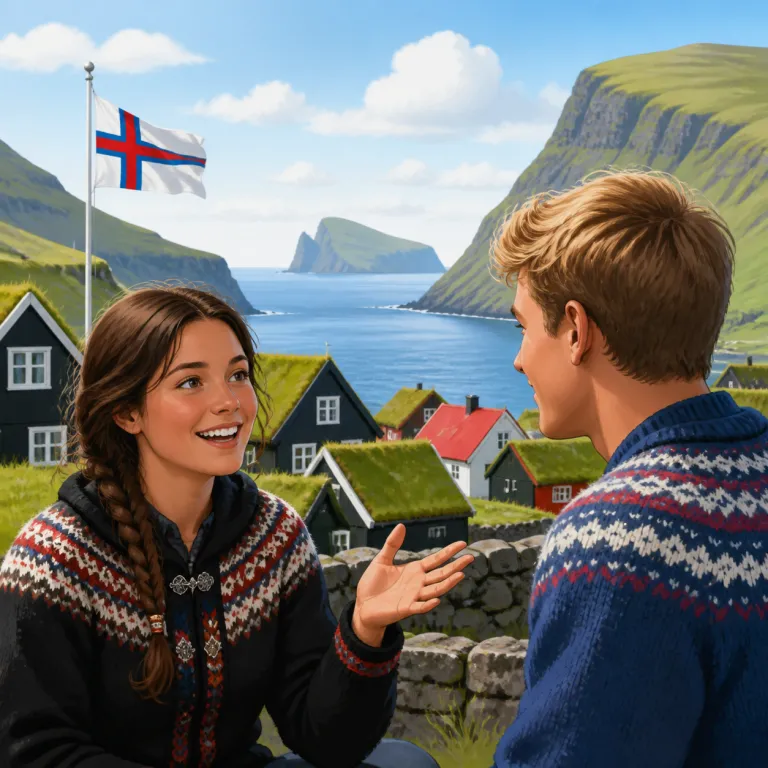
フェロー諸島の、フェロー人の
adjective 形容詞フェロー諸島、その住民、文化などに関係することを表す形容詞で、Faroese culture や Faroese fishermen のように使う。言語だけを指す既存の名詞用法より対象範囲が広い。
北大西洋のフェロー諸島で話される言語。スカンジナビア言語の一種で、デンマーク領内で使用される。
Faroese is the language spoken mainly in the Faroe Islands. It is a North Germanic language, related to Icelandic and Norwegian, and the word is usually used in linguistic or cultural contexts.
Japanese, Chinese などの -ese と同じ型で覚えると定着しやすい語。Faroe Islands を知っていれば、Faroese は「フェロー諸島の人・ことば・その土地のもの」という連想がすぐ働く。言語名としては speak Faroese, learn Faroese の形で出やすい。北欧まわりの語なので Danish や Icelandic と混同しやすいが、「島の名 Faroe に -ese が付いた語」と見れば、地名ベースで整理して思い出しやすい。
Notice the ending `-ese`, the same pattern as in `Japanese` or `Chinese`. That tells you it can name a people, language, or thing from a place. Connect it to the `Faroe Islands`, and `Faroese` becomes easy to place. It is often seen in phrases like `speak Faroese` or `learn Faroese`.
Faroese is spoken in the Faroe Islands.
フェロー語はフェロー諸島で話されている。
The Faroese language has Norse roots.
フェロー語は古ノルド語に由来する。
Learning Faroese is quite challenging for English speakers.
英語話者にとってフェロー語を学ぶのは非常に難しい。
文脈によって、次の意味でも使われます。
フェロー諸島、その住民、文化などに関係することを表す形容詞で、Faroese culture や Faroese fishermen のように使う。言語だけを指す既存の名詞用法より対象範囲が広い。
フェロー諸島出身の人、または同諸島の住民を指す。単数では a Faroese、複数でも Faroese と形を変えずに用い、言語としての Faroese とは文脈で区別する。
Faroese は Faroe に言語・民族名の接尾辞 -ese が付いた語。Faroe は古ノルド語 Færeyjar(おそらく「羊の島々」)に由来し、-ese は Japanese や Chinese と同系なので、「フェロー諸島の人々・ことば」という成り立ちがそのまま語義になっている。
Faroese is formed from Faroe with the suffix -ese, which is often used for peoples and languages, as in Japanese or Chinese. Faroe comes from Old Norse Færeyjar, probably meaning "sheep islands." So the word originally meant simply "of the Faroe Islands," and then came to name both the people and their language.
この英単語をクイズで覚えよう