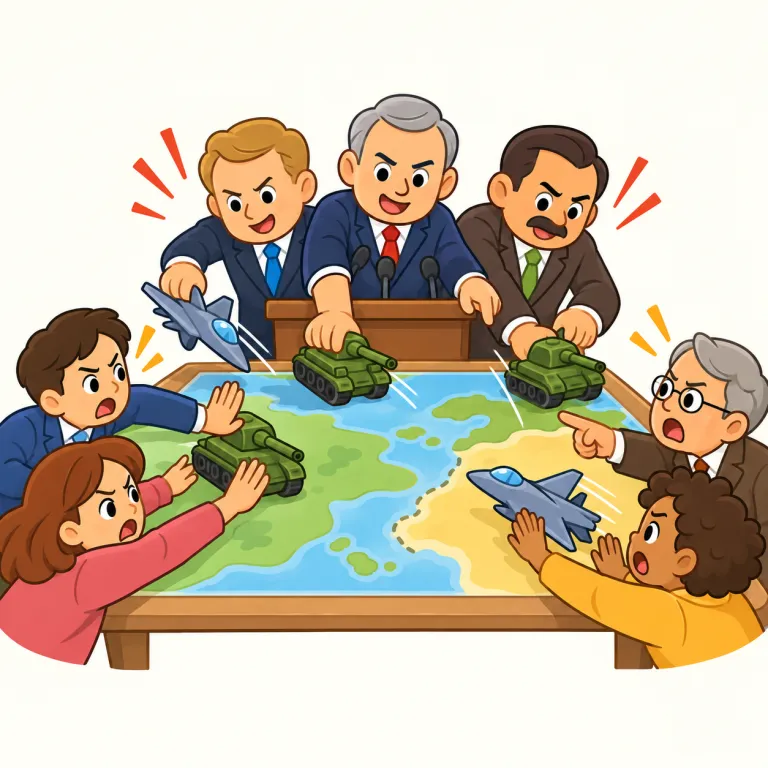
戦争挑発
解説 Definition
戦争や紛争を扇動する、または推し進めるための言動や政策。戦争を意図的に引き起こそうとする傾向。
Warmongering means encouraging war or acting in a way that makes war more likely. It is usually used in politics, news, and criticism of aggressive leaders or policies. The word has a strongly negative meaning.
覚え方のコツ Memory Tip
war が見えれば中心は「戦争」。さらに fishmonger のように monger は「〜を売り込む人」なので、warmonger は「戦争を売り込む人」、warmongering はその姿勢や言動全体です。単なる pro-war より、利益や政治目的のために戦争を進めるという強い非難を含む語。ニュースでは accusations of warmongering, anti-warmongering rhetoric などの形で出やすく、warming と見間違えないことも重要です。
Split it into "war" + "monger." A monger is someone who promotes or pushes something, like in "fishmonger," so "warmongering" is pushing toward war. Watch the middle part "monger" so you do not confuse it with "warming."
例文
The government was accused of warmongering.
政府は戦争挑発をしていると非難された。
Anti-warmongering protests erupted across the city.
戦争挑発に反対するデモが市内各地で起こった。
The media criticized the administration for warmongering.
メディアは政権の戦争挑発を批判した。
warmongering の類義語・関連語
warmongering の語源・成り立ち Etymology
warmongering は war「戦争」+ monger「商う人」+ -ing。war は古フランス語 werre、monger は古英語 mangere に由来し、fishmonger も同型です。『戦争を売る』という形なので、『戦争挑発』に非難がこもります。
Warmongering is made from `war`, `monger`, and `-ing`. `War` came into English through Old French `werre`, while `monger` comes from Old English `mangere`, meaning a trader or dealer, as in `fishmonger`. So the word literally suggests "dealing in war," which helps explain its strongly critical tone.
同じレベルの語彙をもっと
外部辞書で調べる
この英単語をクイズで覚えよう