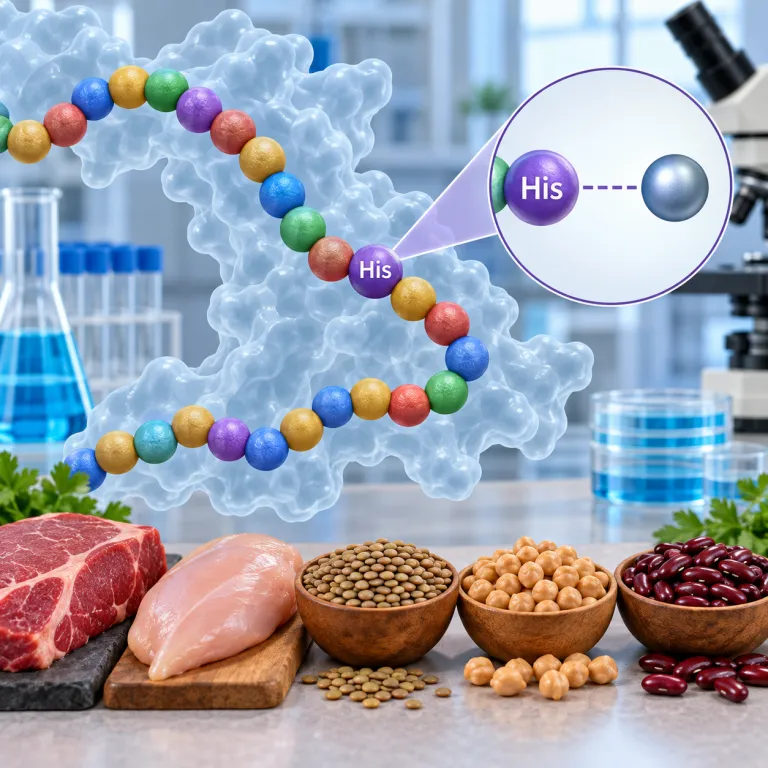
ヒスチジン
解説 Definition
タンパク質を構成するアミノ酸の一種。人間にとって必須アミノ酸で、酵素反応や金属結合などの生物学的機能に重要な役割を果たす。
Histidine is one of the amino acids that the body uses to build proteins. It is important in biology, nutrition, and chemistry. The word is mainly used in scientific or medical contexts rather than everyday conversation.
覚え方のコツ Memory Tip
histidine は、まず amino acid 名でよく見る語尾 -ine を「生化学の物質名サイン」として押さえると覚えやすいです。histamine, histology などの hist- を見たことがあれば、「体・組織まわりの専門語」に出やすい形だと連想できます。意味は個別に細かく追うより「必須アミノ酸の一つ」と太く記憶するのが実用的です。biology や nutrition では lysine, leucine, valine など他のアミノ酸名と並んで出るので、単語単体で覚えるより “-ine のアミノ酸グループ” として束で覚えると残りやすいです。histamine とは別物な点にも注意。
Notice the ending `-ine`, which often appears in chemistry and biology words like amino acids. It is easier to remember `histidine` as one member of the `-ine` science-word group, together with words like `lysine` and `valine`. Be careful not to mix it up with `histamine` just because they look similar.
例文
Histidine is an essential amino acid important for protein synthesis.
ヒスチジンはタンパク質合成に重要な必須アミノ酸です。
Biochemists study histidine's role in enzyme function and metal binding.
生化学者は、酵素の働きや金属結合におけるヒスチジンの役割を研究しています。
Foods rich in histidine include meat, poultry, and legumes.
ヒスチジンが豊富な食品には肉、家禽、豆類が含まれます。
histidine の語源・成り立ち Etymology
histidine はドイツ語 Histidin を経て、ギリシャ語 histos「織物・組織」に化学語尾 -ine が付いた語です。もとは『組織に関わる成分』ほどの名で、体の材料になるアミノ酸だと見える語です。histology や histamine も同じ hist- を持ちます。
Histidine came into English through German Histidin. It is built from Greek histos, meaning "tissue" or "web," with the chemical ending -ine. The name originally suggested a substance connected with body tissue, which fits its place as an amino acid. Related words with the same root include histology and histamine.
同じレベルの語彙をもっと
外部辞書で調べる
この英単語をクイズで覚えよう