カルスト
解説 Definition
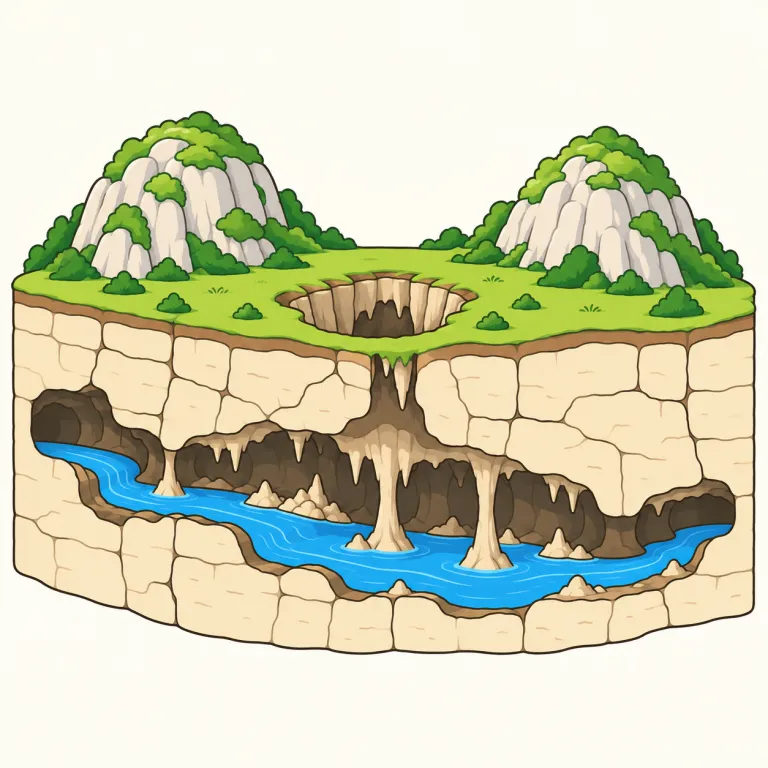
karst は、石灰岩などの水に溶ける岩石が溶かされてできる「カルスト」地形です。洞窟、陥没穴、地下水路などを伴います。
Karst is a type of landscape formed when soluble rock, especially limestone, is gradually dissolved by water. It commonly includes caves, sinkholes, disappearing streams, underground drainage systems, and distinctive rocky hills.
使い方 Usage
使い分け Common distinctions
- 単に岩の多い地形を指すのではなく、水が岩石を溶かしてできることが要点です。 The defining feature is rock being dissolved by water; a rocky landscape alone does not make an area karst.
覚え方のコツ Memory Tip
雨水が石灰岩を溶かし、洞窟・陥没穴・地下河川を作る景観を一組で覚えます。スロベニアの Kras、ドイツ語で Karst と呼ばれる地域の名に由来する語です。
Picture rainwater dissolving limestone to create a connected landscape of caves, sinkholes, and underground rivers. The term comes from the region called Kras in Slovenian and Karst in German.
例文
The region is famous for its karst caves and clear underground rivers.
その地域はカルスト洞窟と澄んだ地下河川で有名です。
A karst landscape often has sinkholes and limestone hills.
カルスト地形には、陥没穴や石灰岩の丘がよく見られます。
karst の類義語・関連語
karst の語源・成り立ち Etymology
ドイツ語 Karst から。スロベニアとイタリアにまたがるカルスト地方(スロベニア語 Kras)の地名に由来する。石灰�ite岩地形の研究がこの地域で進んだため、溶食地形の総称となった。関連語: karstification(カルスト化)。地名がそのまま地形学用語になった例。
English karst was borrowed from German Karst, the German name for the limestone plateau called Kras in Slovene, extending across parts of present-day Slovenia and Italy. Because the region became a major example in the study of caves, sinkholes, and limestone dissolution, its place name developed into the international geological term for this type of terrain. The derived word karstification denotes the processes through which a karst landscape forms.
同じレベルの語彙をもっと
外部辞書で調べる
この英単語をクイズで覚えよう