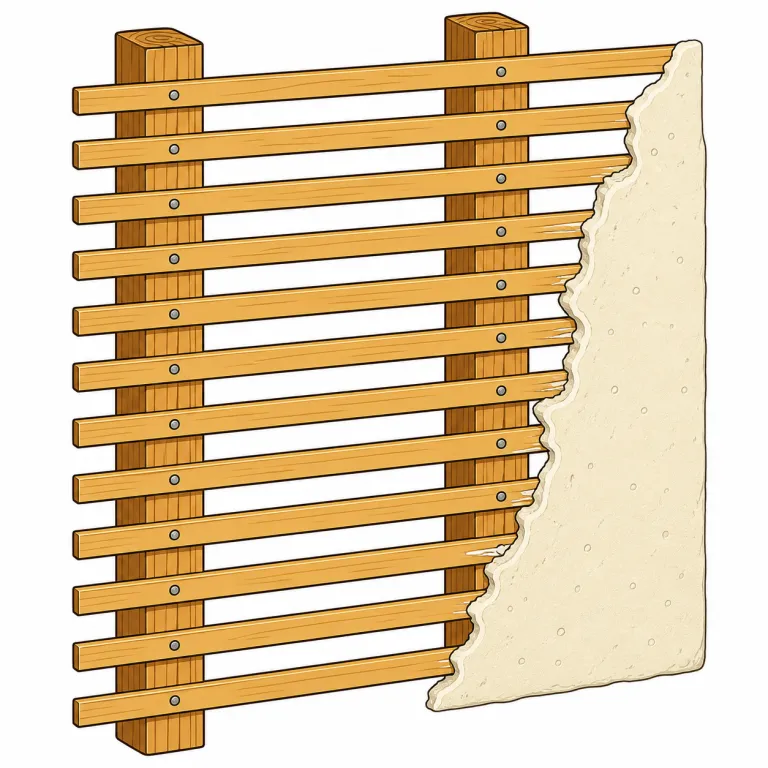
ラス、木摺り
解説 Definition
建築で、漆喰やモルタルを塗る下地として壁や天井に取り付ける、細長い薄板や細い部材を指す名詞。伝統的には木製が多いが金属製もあり、英語では建材としての「ラス」全般を表し、日本語の木摺りに近い語。
A lath is a thin, narrow strip of wood, metal, or another material used in building. It is commonly placed in a series to support plaster, roof tiles, or other surfaces. The word is mainly used in construction and older wall systems.
覚え方のコツ Memory Tip
lath は建築の場面に限定して覚えると定着しやすい語です。完成した壁や天井そのものではなく、plaster や mortar をのせる前の「細長い下地材」と押さえるのがコツ。薄い板を何本も並べる感覚なので、slat や lattice のような「細い板・格子」の仲間だと思うとイメージしやすいです。頻出は wooden lath, metal lath, lath and plaster。綴りがよく似た lathe(旋盤)とは別語なので、建材か機械かで切り分けて覚えると混乱しません。
Think of `lath` as a building word, not an everyday word. Picture many thin strips of wood or metal under a wall before plaster goes on. It belongs with words like `slat` and `lattice`, which also suggest narrow pieces. Do not mix it up with `lathe`, the machine.
例文
The lath and plaster construction was common in older buildings.
ラス張りと漆喰仕上げの工法は、古い建物で一般的だった。
Installing lath provides a surface for securing plaster.
ラスを取り付けると、漆喰をしっかり塗り付けるための下地ができる。
The wooden lath strips were nailed to the wall frame.
木製のラス材は壁の骨組みに釘で打ち付けられていた。
lath の語源・成り立ち Etymology
lath は古英語 lætt にさかのぼるゲルマン系の語で、もともとは「細長い板・木片」の感覚です。一本の薄板を指す語から、壁下地の木ずり板を表すようになったと考えると意味の広がりが見えます。関連語は lattice, German Latte。
Lath goes back to Old English laett and belongs to an old Germanic group of words for thin strips of wood. It first meant a narrow board or slat. From that basic idea, it came to mean the thin wooden strips used as a base under plaster; compare German Latte and English lattice.
同じレベルの語彙をもっと
外部辞書で調べる
この英単語をクイズで覚えよう