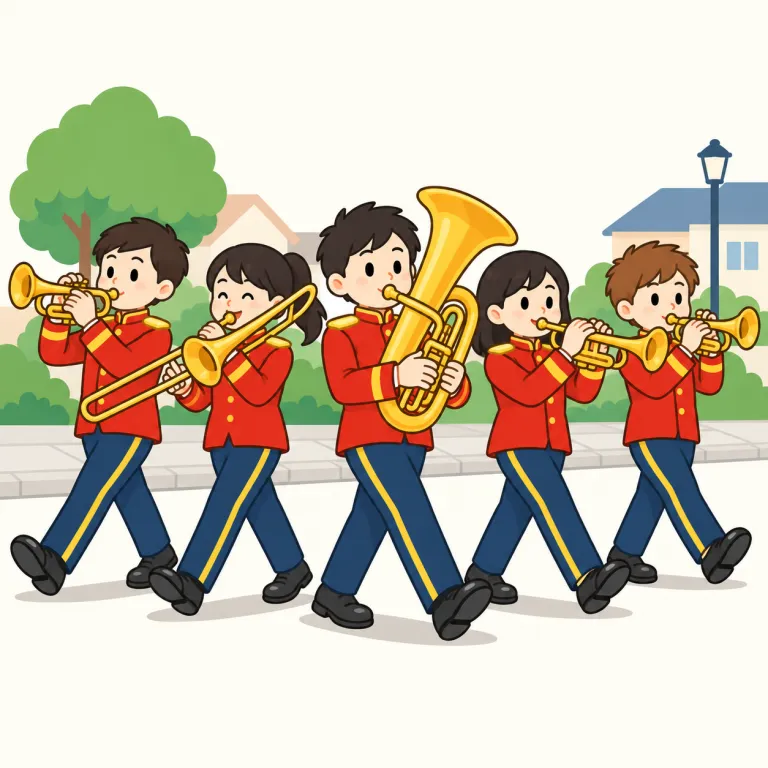
行進
解説 Definition
marching は march(行進する)の現在分詞・動名詞で、行進することや行進中であることを表します。軍隊、楽隊、デモなどがそろって進む場面でよく使われます。
The activity of walking forward with regular, measured steps, usually as part of an organized group such as soldiers, a band, demonstrators, or parade participants. It can also describe people who are currently moving in this way.
覚え方のコツ Memory Tip
原形 march に -ing を付けた現在分詞・動名詞で、動詞なら is marching「行進している」、名詞なら practice marching「行進を練習する」。soldiers、band、students などが一定の歩調で列を作って進む場面と結び付ける。単なる walking より、そろった足取りと集団行動の響きが強い。
Marching is the -ing form of march, created by adding -ing directly. Picture soldiers, a band, or students moving together in a line with regular, measured steps. This separates marching from ordinary walking, which does not imply a shared rhythm or organized formation. The form can be a present participle in “The band is marching” or a gerund in “The students practiced marching.” Useful combinations include marching band, marching in a line, and marching down the street.
例文
The band is marching down the street.
楽隊が通りを行進しています。
We watched the soldiers marching in a line.
私たちは兵士たちが列になって行進するのを見ました。
The students practiced marching before the parade.
生徒たちはパレードの前に行進の練習をしました。
marching の類義語・関連語
marching の語源・成り立ち Etymology
古フランス語「marchier(歩く・踏む)」からの派生で、フランク語(ゲルマン系)の「markōn(境界を示す)」が起源。境界線に沿って歩く行為が「行進」の意味に発展した。関連語:march(行進する)、marquis(辺境伯)。
Marching is formed by adding -ing to march. March entered English through Old French marchier, meaning “to walk” or “tread,” from a Germanic source. It has often been connected with words relating to a boundary or frontier, although the precise early development is not entirely certain. In English, march came to mean walking with deliberate, regular steps, especially in military formation, and then extended to bands, parades, and demonstrations.
同じレベルの語彙をもっと
外部辞書で調べる
この英単語をクイズで覚えよう