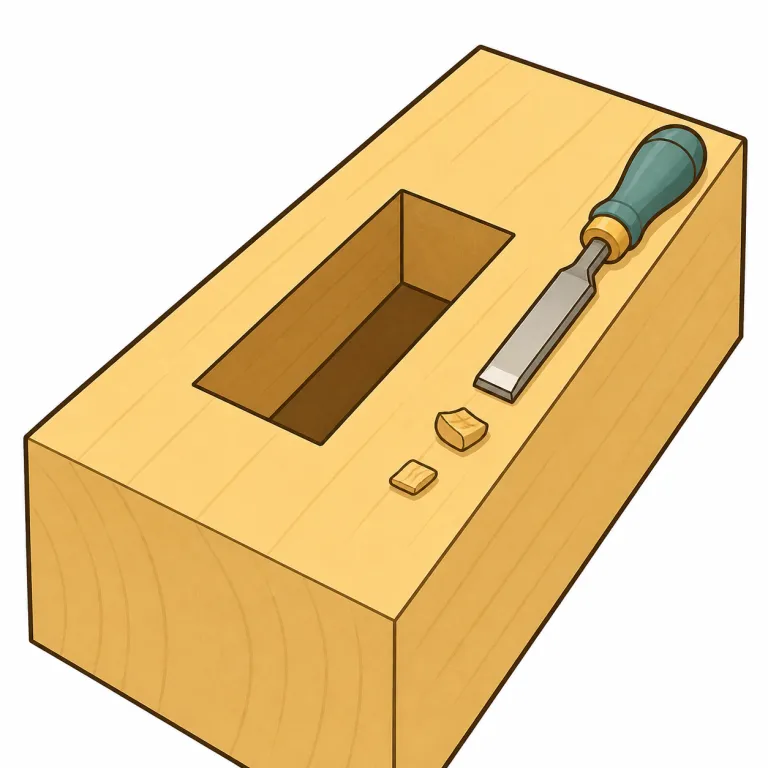
ほぞ穴
解説 Definition
木工や建築で、二つの部材を接合させるために一方に彫られた穴。その穴にほぞ(小さな突起)を挿入して接合する。
A mortise is a hole or slot cut into a piece of wood so another piece can fit into it. It is commonly used in woodworking and furniture making. The word often appears with "tenon" in the phrase "mortise and tenon joint."
覚え方のコツ Memory Tip
単独で覚えるより、まず定番の組み合わせ mortise-and-tenon で一緒に覚えると定着しやすい語です。tenon が突起側、mortise がそれを受ける穴側。つまり「出っ張りを差し込む受け口」が mortise。木工では“穴を切って、ほぞを入れて固定する”場面を頭に置くと意味がぶれません。joinery や joint の文脈で出やすく、tenon と役割を逆にしないことが最大の注意点です。
Do not learn `mortise` alone; learn the fixed pair `mortise-and-tenon`. The `tenon` is the part that sticks out, and the `mortise` is the hole that receives it. Remember: `mortise` is the socket side, not the sticking-out side.
例文
The craftsman carefully cut the mortise to ensure a perfect fit for the tenon.
職人はほぞがぴったり合うように、ほぞ穴を注意深く切り込んだ。
Mortise and tenon joints have been used in woodworking for thousands of years.
ほぞとほぞ穴の継ぎ手は何千年も前から木工で使用されている。
The depth and angle of the mortise determine the strength of the final joint.
ほぞ穴の深さと角度は最終的な接合の強度を決定する。
mortise の類義語・関連語
mortise の語源・成り立ち Etymology
古フランス語 mortaise に由来し、さらにアラビア語 murtazz「固定された」にさかのぼるとされます。tenon と組むための『受ける穴』という発想がそのまま意味になった語で、関連語に mortised、mortise-and-tenon があります。
`Mortise` came into English from Old French `mortaise`. It is often traced further back to Arabic `murtazz`, meaning something fixed or fastened. The word came to name the hole cut to receive a matching piece in joinery, which is why it appears in terms like `mortise-and-tenon`.
同じレベルの語彙をもっと
外部辞書で調べる
この英単語をクイズで覚えよう