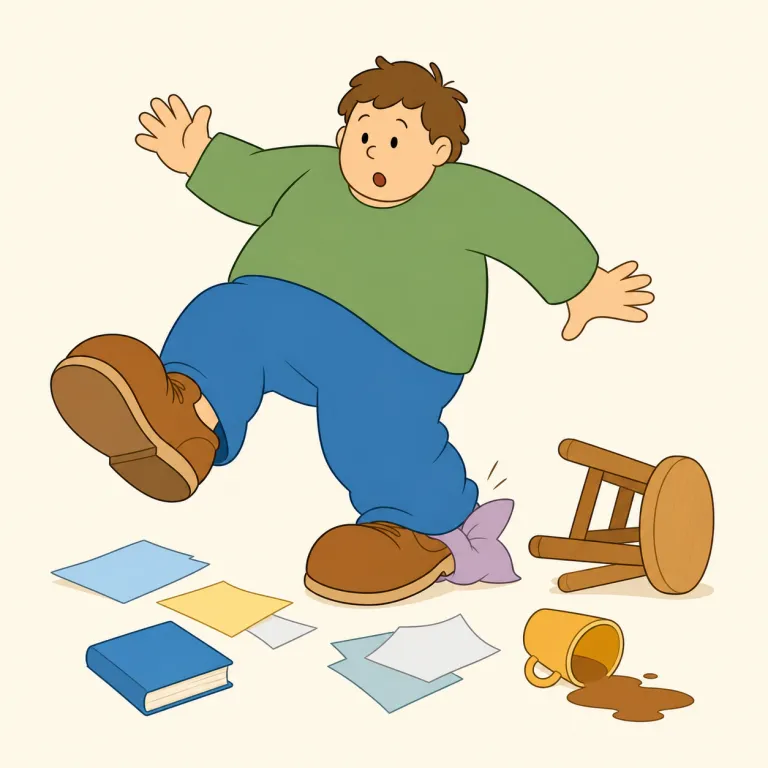
のろまで不器用な間抜け者
解説 Definition
動作が鈍かったり不器用だったりして、周囲に迷惑をかけがちな人をくだけて表す名詞。単に頭が悪いというより、がさつで気が利かず、のろまで間の抜けた人物を見下して言うニュアンスが強い。
An oaf is a stupid or awkward person, especially someone who behaves in a rough or clumsy way. It is usually used as an insult in everyday English, so it can sound rude.
覚え方のコツ Memory Tip
oaf は「頭が悪い人」より、「大きくて鈍く、不器用で、気も利かず、まわりに迷惑をかける人」をひとまとめにした語として覚えると定着しやすいです。fool や idiot が知性の低さに寄りやすいのに対し、oaf は clumsy, awkward, rude の要素が混ざった感じ。物を倒す、どんくさく動く、空気を読まずがさつにふるまう人物像を結びつけるのがコツ。会話では you big oaf! の形で、強い侮辱というより、あきれ混じりに言うこともあります。
Think of an oaf as more than just a stupid person. It often suggests a big, awkward, clumsy person who knocks things over or behaves roughly. The common phrase "you big oaf" can help you remember that physical awkwardness is part of the word.
例文
He felt like an oaf when he tripped over his own feet at the party.
パーティーで自分の足がもつれて転んだとき、彼は自分がひどく不器用な間抜けに思えた。
The oaf knocked over the lamp while dancing.
そののろまで不器用な男は、踊っている最中にランプを倒した。
Don't be such an oaf; you're spilling drinks everywhere.
そんな間抜けな振る舞いはやめて。飲み物をあちこちにこぼしているよ。
oaf の類義語・関連語
類義語
対義語
oaf の語源・成り立ち Etymology
oaf は17世紀英語で、もとは「妖精に取り替えられた子」を指し、北欧語系の alfr/古英語 ælf「妖精・エルフ」に結びつくとされます。そこから「愚鈍な者」へ意味がずれ、今の「間抜け」になりました。関連語は elf, elfin。
Oaf appeared in 17th-century English and originally referred to a child believed to have been left by fairies in place of a human one. It is thought to be connected with Germanic words for elves or fairies, such as Old Norse alfr and Old English aelf; related English words are elf and elfin. From that old folklore sense, it later shifted to mean a foolish or clumsy person.
同じレベルの語彙をもっと
外部辞書で調べる
この英単語をクイズで覚えよう