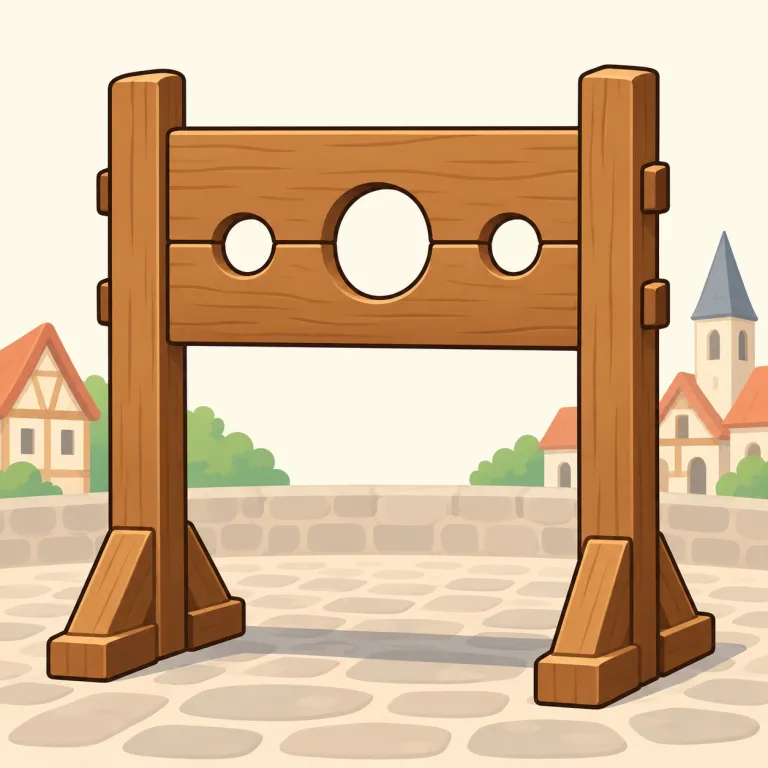
公然と非難する、さらし者にする
verb 動詞人や組織を公の場で激しく非難し、世間の批判や嘲笑にさらすこと。受動態be pilloried for ...の形で、言動や失策を理由に報道機関や世論から集中攻撃を受ける場面によく使われる。
中世から近現代にかけて使用された刑罰装置。罪人を公開の場でさらし者にするための木製の枠。
A pillory was a wooden frame used in the past to lock a person's head and hands in public as punishment and shame. Today, the word is also used figuratively to mean being publicly criticized or humiliated. The literal meaning is historical, while the figurative meaning is more common now.
『さらし台』そのものより、現代英語でよく出る be pilloried in the press のような「人前で激しく非難される」の感覚と一緒に覚えると残りやすい。町の広場で頭と手を固定され、通行人の視線にさらされる一枚絵を持つこと。public shame の道具だと整理すると、単なる punishment より“見せしめ・辱め”のニュアンスが立つ。pillow と見間違えやすいが無関係。
This word is easier to remember through the modern phrase `be pilloried in the press`. It gives the idea of being publicly shamed, not just punished. Also be careful not to confuse it with `pillow` because they look similar but are unrelated.
In medieval times, criminals were placed in the pillory as punishment.
中世には、犯罪者は罰としてさらし台にかけられた。
The town square had a pillory used to publicly shame offenders.
町の広場には、罪人を公衆の面前でさらし者にするためのさらし台があった。
Being put in the pillory was both painful and humiliating.
さらし台にかけられることは苦痛であり、屈辱的でもあった。
文脈によって、次の意味でも使われます。
人や組織を公の場で激しく非難し、世間の批判や嘲笑にさらすこと。受動態be pilloried for ...の形で、言動や失策を理由に報道機関や世論から集中攻撃を受ける場面によく使われる。
pillory は古フランス語 pilori、さらに中世ラテン語 pillorium に由来するとされる語。柱状のさらし刑具を指した語で、pillar も近い仲間と考えると、通りに立てて恥をさらす道具の姿がつかみやすい。そこから比喩的に「公衆の前で辱める」意味も生まれた。
"Pillory" came into English from Old French pilori, from Medieval Latin pillorium. It first named the wooden public punishment frame set up like a post in an open place. Because people were exposed to shame in it, the word later also developed the figurative sense of publicly humiliating someone. It is often linked with pillar as a near relation in form and image.
この英単語をクイズで覚えよう