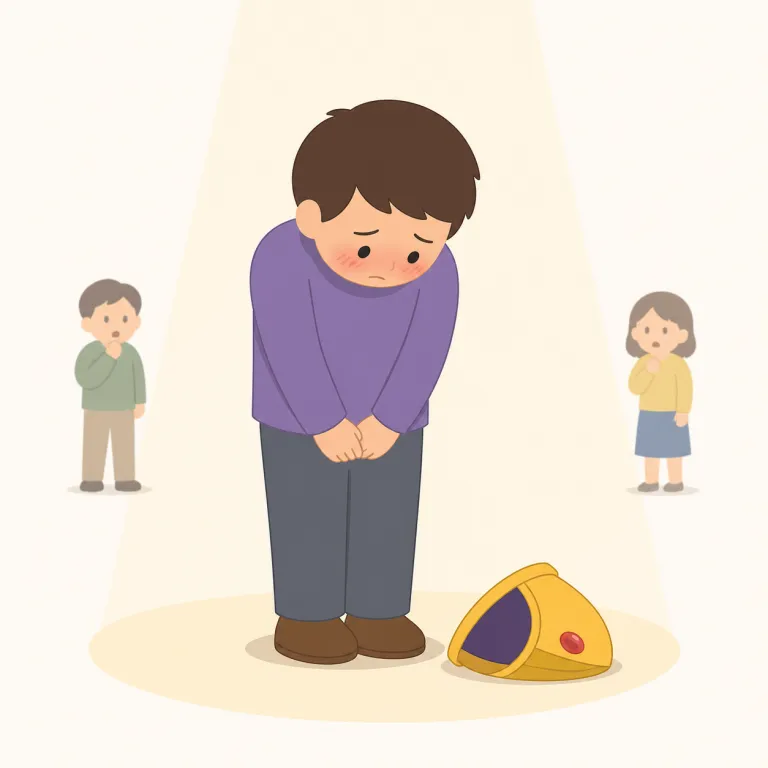
humiliation
humiliation はTOEIC 860・TOEFL 80・IELTS 6.5レベルの英単語で、「屈辱」という意味があります。発音記号は /ˌhjuːmɪliˈeɪʃən/ です。
屈辱
解説 Definition
自尊心が傷つけられたり、恥をかかされたりすることで胸の奥に深い苦痛や悔しさがわき起こる状態を指します。社会的な評価や名誉が下がったと感じたときに、その出来事が個人の価値を損なったように思える感覚です。こうした経験は無力感や対人関係への不信を生み、長く心に残ることがあります。
Humiliation is a very strong feeling of shame, embarrassment, or loss of pride. It often happens when someone is insulted, treated badly, or made to look foolish in front of others. The word usually describes a painful emotional experience.
覚え方のコツ Memory Tip
humble(へりくだった、控えめな)と並べて覚えると残りやすい語。humiliate が「相手のプライドを傷つけて恥をかかせる」、humiliation はその結果として味わう「屈辱」という流れ。単なる embarrassment(気まずさ・恥ずかしさ)より深く、面目や自尊心が傷つく重さがある。public humiliation, suffer humiliation の形でよく出る。
Link it with `humble` and `humiliate`. If someone humbles you in a cruel way, the result is `humiliation`. It is stronger than simple `embarrassment`, and often appears in phrases like `public humiliation` or `suffer humiliation`.
例文
He felt deep humiliation when his teacher criticized him in public.
先生に人前で批判され、彼は深い屈辱を感じた。
The loss was a humiliation for the team.
その敗北はチームにとって屈辱であった。
She refused to endure further humiliation from her employer.
彼女は雇用者からのこれ以上の屈辱に耐えることを拒否した。
humiliation の類義語・関連語
対義語
派生語
紛らわしい語
humiliation の語源・成り立ち Etymology
humiliation はラテン語 humilis「低い」から来て、さらに humus「地面・土」にさかのぼります。humil- に名詞化の -ation が付いた形で、「人を地面すれすれまで低くする」感覚から「屈辱」の意味になりました。関連語は humble, humility。
Humiliation comes from Latin humilis, meaning "low" or "close to the ground," which is related to humus, meaning "earth" or "soil." It passed into English through forms built on humil- with the noun ending -ation. The idea developed from being made low or brought down to the ground, which led to the sense of shame or loss of dignity. Related English words include humble and humility.
同じレベルの語彙をもっと
TOEIC 860の一覧へ →外部辞書で調べる
この英単語をクイズで覚えよう