キノコのひだ
noun 名詞キノコの傘の裏側に放射状に並ぶ薄いひだを指し、通常は複数形 gills で用いる。胞子を作る部分で、キノコの種類や特徴を説明する際によく現れ、魚などの呼吸器官である「えら」とは別の語義である。
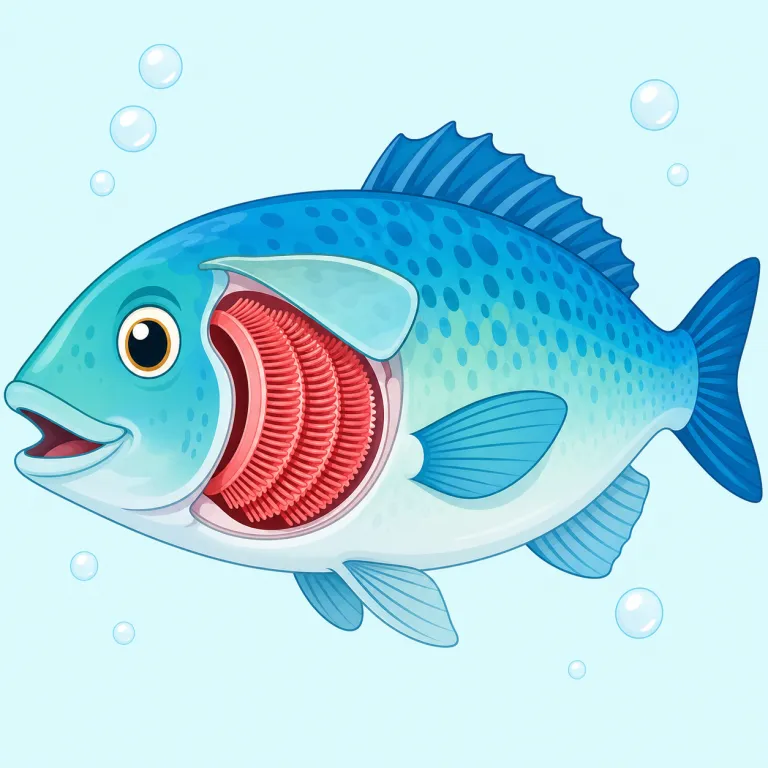
魚や一部の水生動物が、水中の酸素を取り込んで呼吸するために使う器官。
An organ that fish and some other water animals use to take oxygen from water. It allows them to breathe underwater.
gill は魚などの「えら」で、複数のひだや左右の器官を述べるときは gills と複数形で現れることが多い語です。Fish breathe through their gills. を基本文として丸ごと覚え、「魚は口から水を入れ、えらの上を通して酸素を取り込む」場面を固定しましょう。breathe through gills「えらで呼吸する」、water passes over the gills「水がえらの上を流れる」、gill opening「えら穴」が頻出の組み合わせです。肺を表す lung と水中呼吸の gill を対にすると定着しやすいです。
Picture water flowing over the folds beside a fish's head as it takes in oxygen. Remember "Fish breathe through their gills" and pair gill with lung to connect each organ with its breathing environment.
Fish breathe through their gills.
魚はえらで呼吸します。
The shark has five gill openings on each side.
そのサメには左右それぞれに五つのえら穴があります。
Water passes over the fish's gills.
水は魚のえらの表面を流れます。
文脈によって、次の意味でも使われます。
キノコの傘の裏側に放射状に並ぶ薄いひだを指し、通常は複数形 gills で用いる。胞子を作る部分で、キノコの種類や特徴を説明する際によく現れ、魚などの呼吸器官である「えら」とは別の語義である。
gill「えら」は中英語に現れ、古ノルド語や古デンマーク語の魚のえらを表す語に近いとされる北欧系語である。さらに古くは「顎・唇」に関わる語根と結びつける説があり、口の脇のひだ状器官を指したと考えると、魚の呼吸器官の意味が腑に落ちる。
The word appears in Middle English and is associated with Scandinavian words for a fish's breathing organs. A possible older connection with words for the jaw or lip has also been proposed.
この英単語をクイズで覚えよう