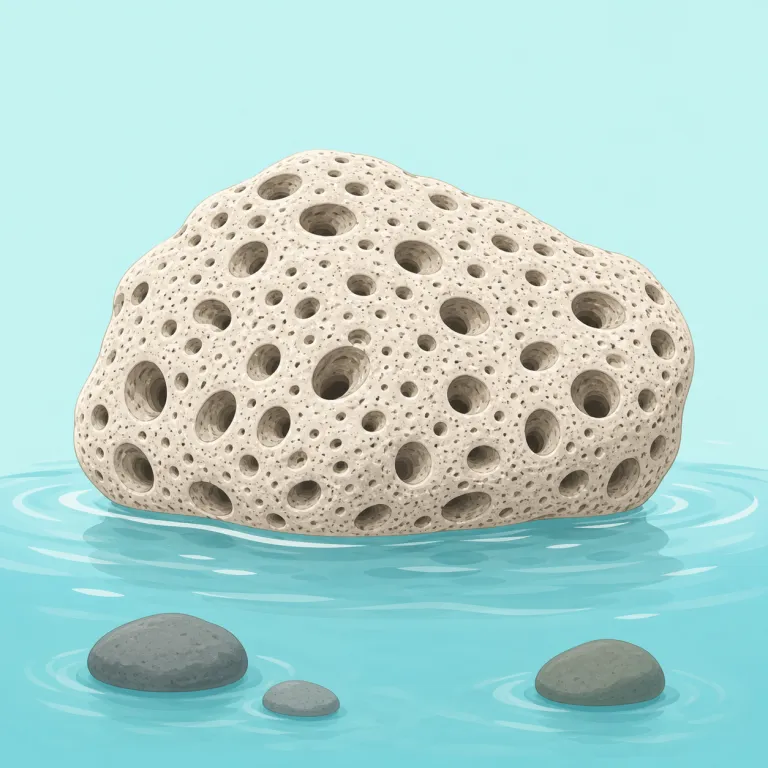
軽石
解説 Definition
火山性のガラス質の岩石で、多孔質で非常に軽いもの。研磨や洗浄に使われる研磨材として、また軽石浴などに利用されます。
Pumice is a very light, rough stone formed by volcanic activity. It is often used for cleaning, polishing, or removing hard skin. Because it has many tiny holes, it can be much lighter than ordinary rock.
覚え方のコツ Memory Tip
まず `pumice stone` という固まりで覚えると定着しやすい語です。日用品や美容では、かかとをこする軽石の文脈でよく出ます。普通の stone は重くて硬いものですが、pumice は“石なのに穴だらけで軽い”のが核心。スポンジのように表面がざらつき、削る・磨く用途に使われる場面と結び付けると忘れにくいです。`lava` は溶岩そのもの、`ash` は灰なので、pumice は「固まった多孔質の軽い石」と区別すると整理できます。
Remember the common pair pumice stone. The strong memory image is a stone full of tiny holes, so light and rough that people use it to rub skin or polish surfaces. That contrast, a stone that feels unusually light, makes the word stick.
例文
The pumice stone is used to remove calluses from the feet.
軽石は足にできたたこを取り除くために使われます。
The volcanic pumice floated across the ocean for thousands of miles.
火山性の軽石は数千マイルにわたって海を漂いました。
Pumice has a rough surface, so it is used as an abrasive in cleaning products.
軽石は表面がざらざらしているため、清掃用品の研磨材として使われます。
pumice の語源・成り立ち Etymology
pumice はラテン語 pumex, pumicis「軽石」に由来し、火山岩が泡立って固まったような見た目をそのまま名にした語です。はっきりした接頭辞分解はありませんが、pumiceous や pumicite が同根。石なのに泡のように軽い、という感覚が意味の核です。
Pumice comes from Latin pumex or pumicis, the word for this light volcanic stone. The name was based on the stone itself, known for its rough, foamy look and unusually low weight. In English, the sense stayed close to the original Latin meaning. Related forms include pumiceous and pumicite.
同じレベルの語彙をもっと
外部辞書で調べる
この英単語をクイズで覚えよう