風上ぎりぎりに帆走する
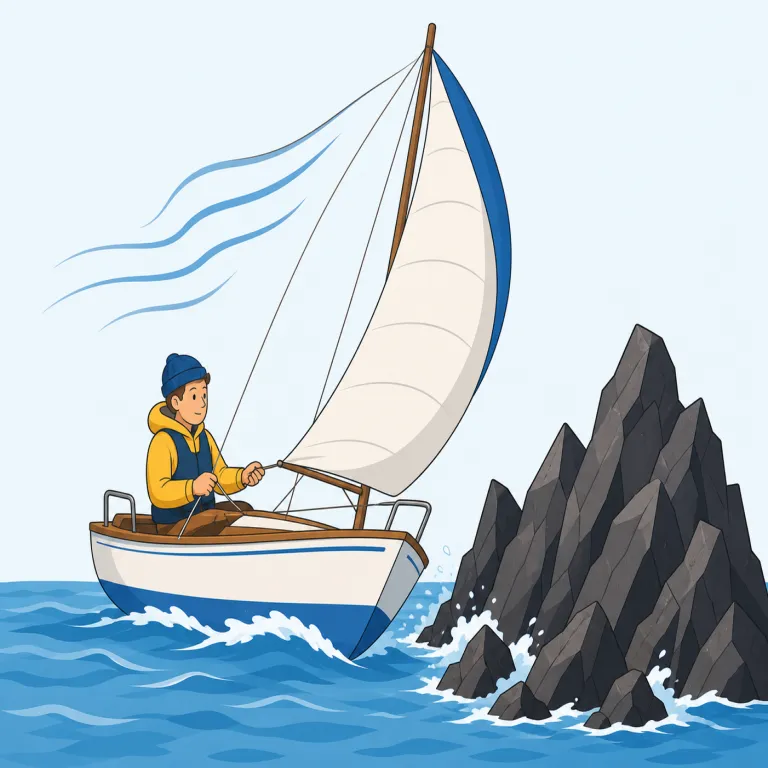
verb 動詞帆船が、帆で進める限界に近い角度まで船首を風上へ向けて航行することをいう。比喩的な危険行為ではなく、風向きに対する実際の帆走状態を表す航海上の用法である。
sail close to the wind はTOEIC 860・TOEFL 80・IELTS 6.5レベルの英熟語で、「危ない橋を渡る」という意味があります。発音記号は /ˈseɪl ˈkloʊs tə ðə ˈwɪnd/ です。
法律やルールのぎりぎりの線で危険な行動をとること。危ない橋を渡る。
To sail close to the wind means to behave in a way that is risky or close to breaking rules. It is used when someone avoids crossing the line completely, but comes very near to it. The phrase often suggests danger, boldness, or questionable judgment.
この句は丸ごと覚えるより、`close to the wind` を「風にかなりきわどく寄せて」と映像で持つと残りやすいです。帆船は風向きぎりぎりを攻めると速い一方、少し誤ると失速・危険になるので、「ルール違反ではないが境界線すれすれを攻める」という意味につながります。法律・規則・倫理の文脈で出やすく、`break the law` のような明白な違反ではなく、`push one’s luck` よりも“線の内側で危うく攻める”感じが強い表現です。
Imagine a sailboat moving very close to the wind to go as far as possible without losing control. That picture gives the idea of staying just inside the limit while taking a real risk. It is often used for behavior that is not clearly illegal, but feels dangerously close.
The company was sailing close to the wind with its aggressive tax avoidance strategies.
その会社は積極的な節税戦略で危ない橋を渡っていた。
He knew he was sailing close to the wind by bending the rules, but he continued regardless.
彼はルールを曲げて危ない橋を渡っていると分かっていたが、それでも続けた。
The journalist sailed close to the wind by publishing sensitive information that could have led to a lawsuit.
そのジャーナリストは訴訟につながりかねない機密情報を公開し、危ない橋を渡った。
文脈によって、次の意味でも使われます。
帆船が、帆で進める限界に近い角度まで船首を風上へ向けて航行することをいう。比喩的な危険行為ではなく、風向きに対する実際の帆走状態を表す航海上の用法である。
sail は古英語 seglan、wind も古英語 wind にさかのぼる航海語です。帆船が風向きぎりぎりまで詰めて進むのは速いぶん失速や転覆の危険もあるため、「危ない橋を渡る」になりました。sailor や windy が縁語です。
This idiom comes from sailing language, with sail and wind both going back to Old English roots. A ship that sails very close to the wind is moving near its safe limit, where skill is needed and danger is higher. That physical idea later became a figurative one for taking risks or acting near the edge of what is safe or allowed.
この英熟語をクイズで覚えよう