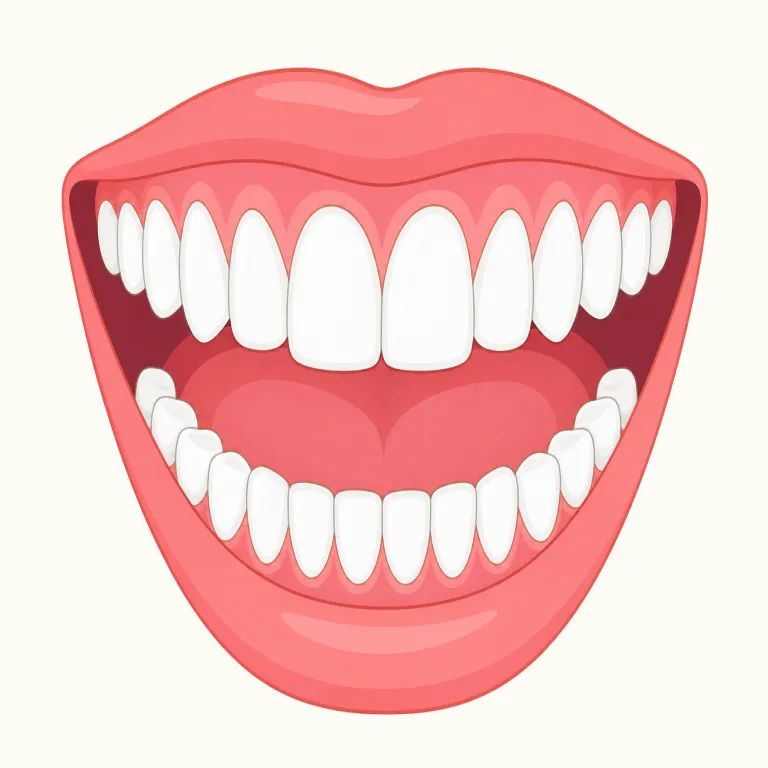
歯状の突起
noun 名詞機械や道具の縁に並ぶ、歯のような突起を複数形で表す。the teeth of a saw、gear、comb のように用い、物を切る、かみ合わせる、引っ掛けるなどの働きをする部分を指す。
口の中にある硬くて白い構造物で、食べ物をかみ砕いたり、発音を助けたりします。多くの動物は種類によって本数が異なりますが、人間は成長すると通常32本の永久歯を持ちます。歯が生え変わるのは、乳歯が抜けたあとに新しい歯が生えてくるときです。
Teeth are the hard white parts inside the mouth that are used for biting and chewing food. They are the plural form of tooth. The word is usually used when talking about health, appearance, eating, or dental care.
tooth の複数形が teeth になる不規則変化として覚える。形は foot→feet、goose→geese と同じ仲間なので、単数の母音が変わる複数パターンとしてまとめると残りやすい。日常では brush your teeth、clean your teeth が非常によく出る。a tooth は1本の歯だが、ふつう歯全体を言う場面では teeth になりやすい。wisdom teeth は親知らず、baby teeth は乳歯で、まとまりごと覚えると実用的。
`Teeth` is the irregular plural of `tooth`, so learn them as a pair. It follows the same vowel-change pattern as `foot` to `feet`, which makes it easier to remember. Everyday phrases like `brush your teeth` are so common that they can help fix the plural form in your mind.
My teeth are white.
私の歯は白い。
I brush my teeth.
私は歯を磨く。
Her teeth look clean.
彼女の歯はきれいに見える。
文脈によって、次の意味でも使われます。
機械や道具の縁に並ぶ、歯のような突起を複数形で表す。the teeth of a saw、gear、comb のように用い、物を切る、かみ合わせる、引っ掛けるなどの働きをする部分を指す。
法律・規則・組織などが人を従わせる力や、違反を実際に罰する能力を持つことを表す比喩的用法。have teeth や give a law teeth の形が多く、単なる方針ではなく実効性があることを強調する。
古英語 tēþ(toothの複数形)に由来し、ゲルマン祖語 *tanþs、印欧祖語 *h₁dónts に遡る。ラテン語 dens も同根で、dentist(歯科医)の語源となった。関連語:dental(歯の)、trident(三叉の槍=三つの歯)。不規則複数形は古英語のウムラウト変化の名残である。
Teeth is the Old English plural form of tooth, from an ancient Germanic word that goes back to an Indo-European root for tooth. The same root appears in Latin dens, which gave English words like dental and dentist. Its irregular plural is very old and preserves an earlier sound change from Old English.
この英単語をクイズで覚えよう