牙
解説 Definition
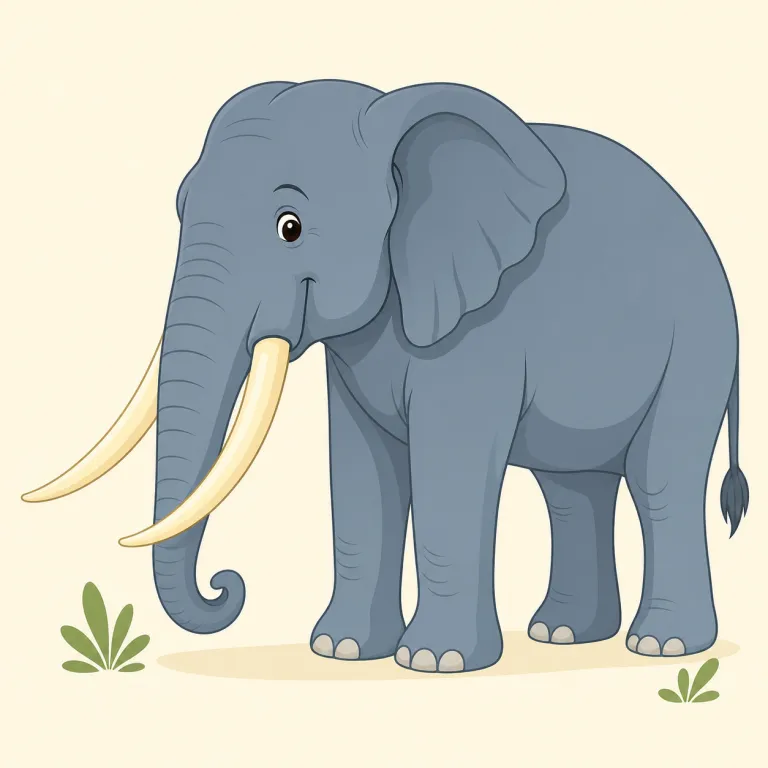
象やセイウチなどの大型哺乳類が持つ、頭から前方に長く突き出た太い歯です。骨質の象牙を含み、さまざまな場面で物を押し出したり、相手を押しのけたりするのに使われます。特に象の牙は古くから装飾や工芸品の材料として珍重されてきました。
A tusk is a long, pointed tooth that grows outside the mouth of some animals, such as elephants or wild boars. Tusks are used for fighting, digging, or defense. The word usually refers to large curved teeth, not normal animal teeth.
覚え方のコツ Memory Tip
tuskはhornと混同しやすいが、角ではなく『前に突き出た大きな歯』として覚えると定着しやすい。elephant tusk, walrus tusk, boar tusk のように動物名とセットで出ることが多く、特に象では ivory(象牙)とも結びつく。角なら horn、口の横から長く伸びるなら tusk という対比を持つと迷いにくい。図鑑やニュースでは複数形 tusks もよく見るので、左右に伸びた2本の牙までまとめて思い浮かべると記憶に残る。
Remember the contrast: a `horn` is a horn, but a `tusk` is a long tooth that sticks out. The word often appears with animals, so link it to `elephant tusk`, `walrus tusk`, or `boar tusk`. It is easier to remember if you picture the two tusks on each side of an elephant’s mouth. You may also meet it with `ivory` in animal or news contexts.
例文
The elephant's tusk was nearly six feet long.
その象の牙はほぼ6フィートの長さがあった。
Poachers hunt elephants illegally for their ivory tusks.
密猟者は象牙を取るために違法に象を狩る。
The walrus used its tusk to haul itself onto the ice.
セイウチは牙を使って氷の上にはい上がった。
tusk の類義語・関連語
紛らわしい語
tusk の語源・成り立ち Etymology
tusk は古英語 tusc『牙・突き出た歯』にさかのぼるゲルマン系の語で、語源的には tooth と近い親族です。tooth や dentist に通じる『歯』の核があるので、tusk はただの角でなく『外へ伸びた巨大な歯』だと理解できます。
Tusk comes from Old English tusc, meaning "fang" or "projecting tooth," and it belongs to the Germanic family of tooth words. It is closely related in origin to tooth, with the same basic idea of a tooth-like structure. Over time, it became used for a large tooth that sticks out clearly from the mouth.
同じレベルの語彙をもっと
外部辞書で調べる
この英単語をクイズで覚えよう