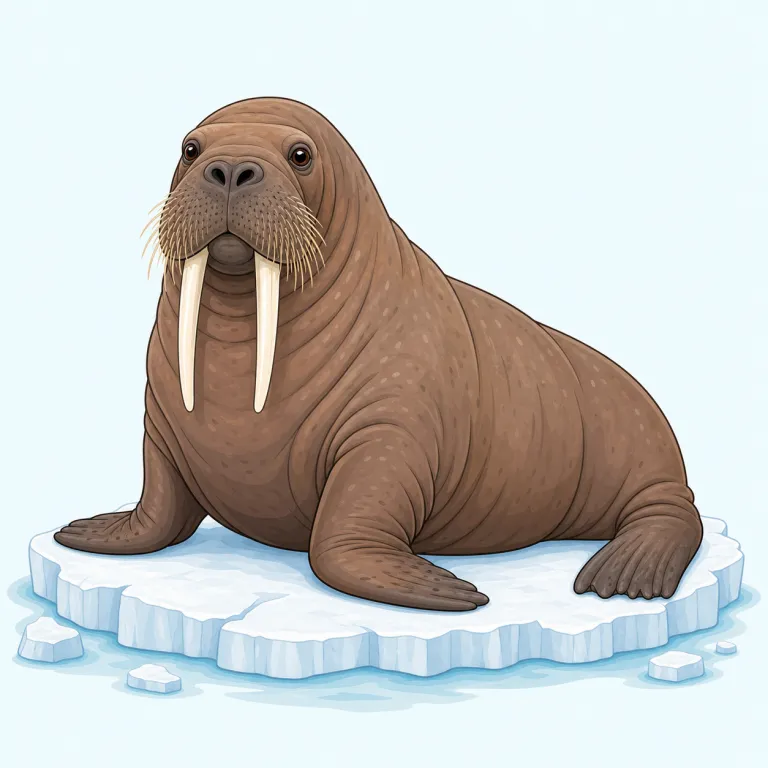
セイウチ
解説 Definition
北極圏に生息する大きな海の哺乳動物で、長い牙と厚い脂肪層が特徴です。寒い海の環境に適応した独特の生物です。
A walrus is a very large sea animal that lives in cold northern waters. It has long tusks, thick skin, and wide flippers. People usually use this word when talking about Arctic wildlife.
覚え方のコツ Memory Tip
walrus は単独で丸暗記するより、"Arctic animal with long tusks" の1枚絵で覚えると残りやすい語です。seal(アザラシ)や sea lion(アシカ)よりずっと大きく、見分ける決定打は elephant のような tusk。英語でも a walrus with long tusks, Arctic walrus のように「北の海」「長い牙」と結びついて出ることが多いので、walrus を見たらまず『牙のある巨大な海獣』を思い出す形にすると混同しにくくなります。
Remember a walrus as the big Arctic sea animal with elephant-like tusks. To fix it in memory, connect it with the picture phrase "Arctic animal with long tusks." That helps separate it from a seal or sea lion.
例文
The walrus has long tusks that help it haul out of the water.
セイウチには長い牙があり、その牙を使って水から這い上がります。
Walruses are often found resting on ice floes in the Arctic.
セイウチはしばしば北極の流氷の上で休んでいるのが見られます。
A walrus can weigh up to 1,500 kilograms.
セイウチの体重は1,500キログラムまで達することがあります。
walrus の類義語・関連語
紛らわしい語
walrus の語源・成り立ち Etymology
walrus は17世紀にオランダ語 walrus から入り、さらに古ノルド語系の語にさかのぼると考えられます。語形は walvis「クジラ」+ ros「馬」の民間語源の影響を受けたとされ、「海の大きな獣」という見え方が「セイウチ」につながります。関連語に rosmhvalr, morse。
English borrowed walrus in the 17th century from Dutch walrus. It is thought to go back to an Old Norse-related word, though the exact history is uncertain. The form was probably shaped by folk-etymology from Dutch words like walvis "whale" and ros "horse," which helped create the idea of a large sea beast. Related old forms include Old Norse rosmhvalr and the English borrowing morse.
同じレベルの語彙をもっと
外部辞書で調べる
この英単語をクイズで覚えよう