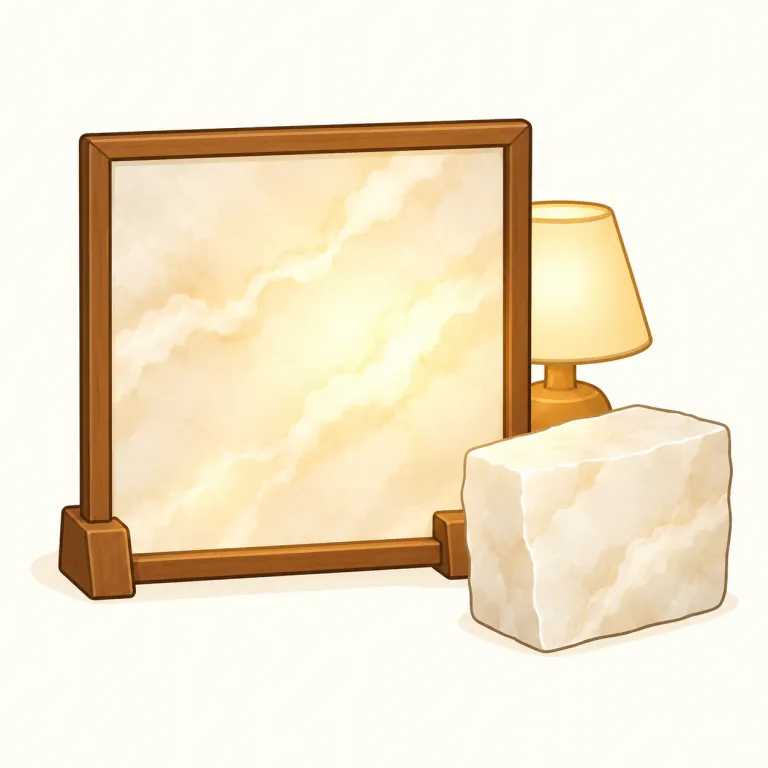
雪花石膏
解説 Definition
alabaster は、彫刻や装飾品に使われる白っぽい石材、雪花石膏を指す名詞です。なめらかで半透明に見えることがあり、古くから美術品や建材に用いられてきました。
A pale, fine-grained stone, usually white or softly colored and sometimes translucent, that is easily carved and used for statues, bowls, panels, and decorative objects. The term can refer to forms of gypsum or calcite used in different periods.
覚え方のコツ Memory Tip
alabaster は彫刻や壺、薄い装飾板に使う、白く滑らかで半透明になり得る石材。an alabaster statue、an alabaster bowl のように素材名として覚える。marble は硬く結晶質な大理石、plaster は成形用の石膏材料であり、見た目が白くても同じ物ではない点を押さえる。
Remember alabaster through its typical objects and appearance: an alabaster statue, bowl, or thin decorative panel. The material is pale, smooth, fine-grained, and often softly translucent, so light may glow through a thin piece. Contrast it with marble, which is generally harder and more crystalline, and with plaster, a prepared material used for coating or molding. Alabaster is the carvable ornamental stone itself. Ancient containers are another useful link, because the word became associated with vessels used for perfumes and precious oils.
例文
The statue was made of alabaster.
その像は雪花石膏で作られていました。
Light passed softly through the thin alabaster panel.
薄い雪花石膏の板を通して、光がやわらかく差し込みました。
The museum displayed a small alabaster bowl from an ancient workshop.
博物館には古代の工房で作られた小さな雪花石膏の鉢が展示されていました。
alabaster の類義語・関連語
alabaster の語源・成り立ち Etymology
古フランス語とラテン語を経て、ギリシャ語 alabastros/alabastos に由来します。ギリシャ語では石材のほか、香油などを入れる小さな容器も表しました。エジプトの地名との関連がしばしば指摘されますが、ギリシャ語以前の詳しい語源は確定していません。
Alabaster entered English through Old French and Latin alabaster, from Greek alabastros or alabastos. In Greek, the word referred both to the stone and to a small vessel, especially one used for perfume or ointment. Such containers were commonly made from pale, easily carved stone. The remoter origin of the Greek term is uncertain, though it has often been connected with an Egyptian place-name. The material name later became established for ornamental gypsum and calcite stones.
同じレベルの語彙をもっと
外部辞書で調べる
この英単語をクイズで覚えよう