抗コリン薬
解説 Definition
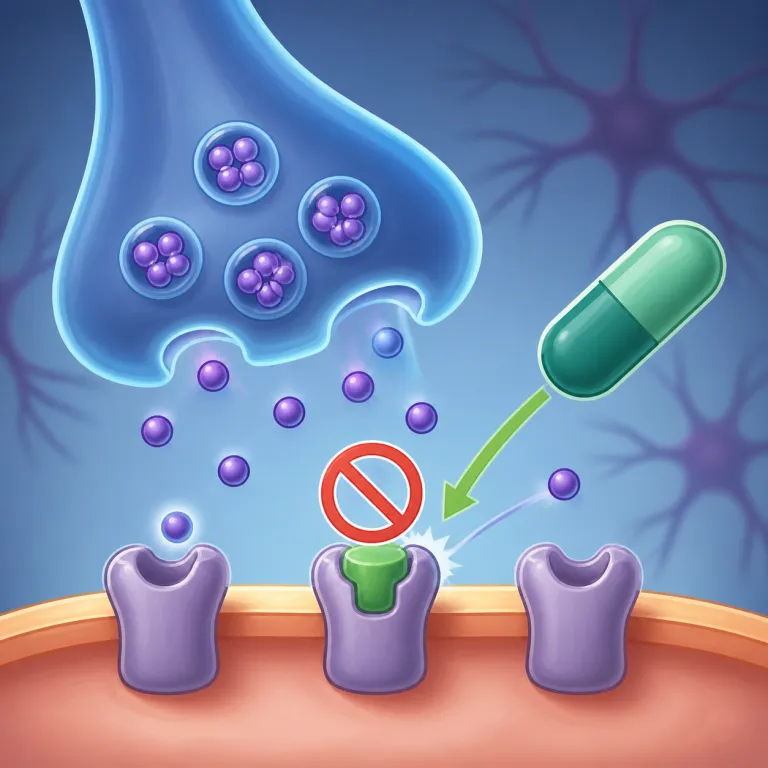
コリン神経系の活動を阻害する医学用語です。抗コリン薬は神経系の特定の信号伝達を遮断し、様々な医学的状態の治療に使用されます。
An anticholinergic is a drug that reduces the action of acetylcholine, a chemical messenger in the body. It is used in medicine to treat problems such as muscle spasms, overactive bladder, or some breathing conditions. The term is technical and is mostly seen in medical contexts.
覚え方のコツ Memory Tip
`anti-` が付くので、まず「コリン作動性を打ち消す側」と捉える。`cholinergic` は acetylcholine で働く神経系の話なので、`anticholinergic` はその働きをブロックする薬。薬理では「副交感神経を弱める」と結びつけると整理しやすい。典型的な連想は `dry mouth / constipation / urinary retention / blurred vision`。`cholinergic` と対で覚えると、作用方向を取り違えにくい。
Break it into parts: `anti-` means against, and `cholinergic` relates to acetylcholine. So `anticholinergic` means something that blocks that system. A strong memory hook is the typical effect pattern: `dry mouth`, `constipation`, `urinary retention`, `blurred vision`. Learn it as the opposite direction of `cholinergic`.
例文
An anticholinergic blocks the action of acetylcholine in the nervous system.
抗コリン薬は、神経系におけるアセチルコリンの作用を遮断します。
An anticholinergic can be used to treat urinary incontinence and other conditions.
抗コリン薬は、尿失禁やその他の疾患の治療に使用されます。
Side effects of an anticholinergic can include dry mouth and blurred vision.
抗コリン薬の副作用には、口の渇きやかすみ目などがあります。
anticholinergic の類義語・関連語
対義語
anticholinergic の語源・成り立ち Etymology
anticholinergic は anti-(反対の)+ cholinergic から成り、-ergic はギリシャ語 ergon(働き)に由来します。choline はギリシャ語 khole(胆汁)由来で、コリン作動性の働きを抑えることから「抗コリン薬」という意味です。関連語は choline, cholinergic です。
Anticholinergic is made from anti- "against" and cholinergic. The second part includes choline and -ergic, from Greek ergon, meaning "work" or "action." Choline was named from Greek khole, meaning "bile." The full word developed in medicine to mean acting against or blocking cholinergic activity. Related words include choline and cholinergic.
同じレベルの語彙をもっと
外部辞書で調べる
この英単語をクイズで覚えよう