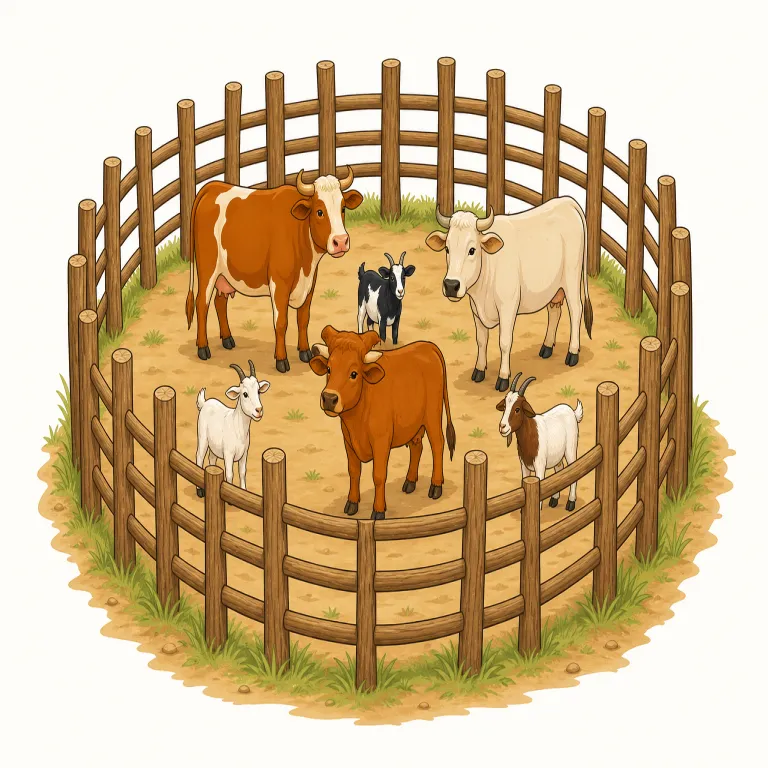
boma
boma はTOEIC 990・TOEFL 100・IELTS 7.5レベルの英単語で、「家畜囲い」という意味があります。発音記号は /ˈboʊmə/ です。
家畜囲い
解説 Definition
アフリカで家畜を囲うための柵または囲い。または野営地の防御構造。
A boma is an enclosure, usually made as a fence or wall, used to keep animals safe or enclosed. The word is especially used in parts of Africa for livestock pens or protected camp areas. It is a regional and cultural term.
覚え方のコツ Memory Tip
覚えるときは、まず基本語の pen(動物を入れる囲い)や enclosure(囲い地)を土台にし、「アフリカ文脈で出る、もっと土地に根ざした囲い」が boma だと押さえると残りやすいです。牛や家畜を外敵から守る fenced enclosure、あるいは防御的な camp を指す語で、barn や stable のような屋内建物ではない点が重要。cattle, livestock, village, camp などと結びつけて覚えると定着します。
Anchor `boma` to easier words like `pen` or `enclosure`, then make it more specific. It is often used in African settings for a fenced area that protects cattle or a camp. That helps you avoid confusing it with indoor places like a `barn` or `stable`. Remember it with words like `cattle`, `livestock`, `village`, and `camp`.
例文
The boma protected the livestock from predators during the night.
その囲いは夜間に家畜を捕食者から保護していた。
The traditional boma was built with acacia branches.
伝統的な囲いはアカシアの枝で作られていた。
Rangers constructed a boma to secure the animals in the wildlife reserve.
レンジャーは野生動物保護区で動物を安全に囲うために囲いを作った。
boma の類義語・関連語
類義語
紛らわしい語
boma の語源・成り立ち Etymology
boma は東アフリカのスワヒリ語 boma「囲い・砦」から英語に入った借用語で、接頭辞や接尾辞に分けるより語ごとの借入が本体です。スワヒリの複数形 maboma やチチェワ語 boma と並べると、「守るための囲い」が意味の芯だとはっきり見えます。
Boma was borrowed into English from Swahili boma, meaning an enclosure, stockade, or fort. It is mainly a direct loanword rather than a word built from smaller English parts. The central idea has stayed the same: a protected enclosed place, especially in East African settings.
同じレベルの語彙をもっと
TOEIC 990の一覧へ →外部辞書で調べる
この英単語をクイズで覚えよう