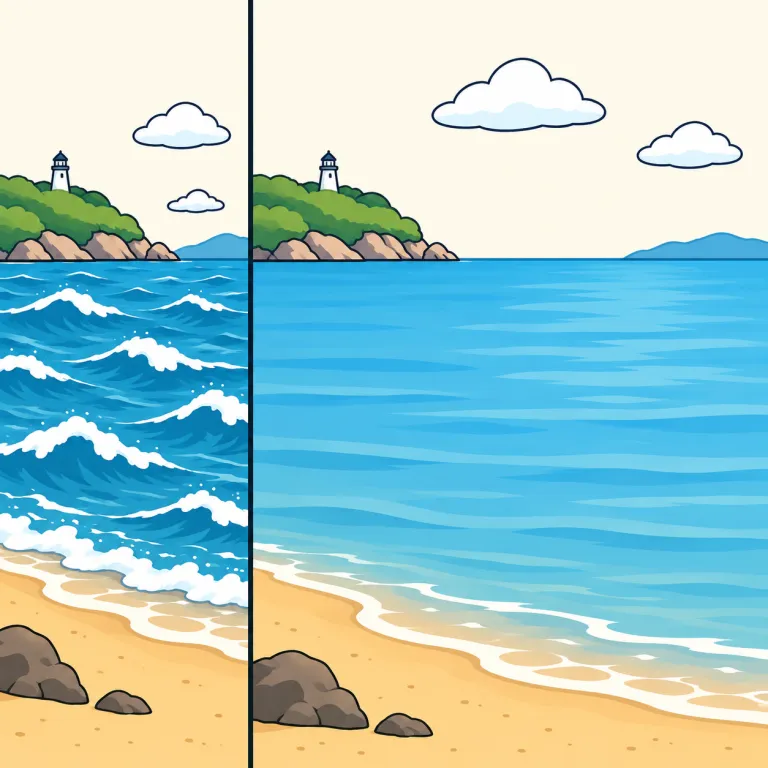
穏やかな
解説 Definition
calmer は calm(穏やかな、落ち着いた)の比較級です。人や状況、天気などが、別のものや以前よりも穏やかであることを表します。
More calm than another person, thing, situation, or earlier state; less agitated, noisy, rough, or tense. It can describe emotions, behavior, surroundings, weather, or the sea.
覚え方のコツ Memory Tip
calm「穏やかな」に比較級の -er を付けた形で、「より穏やかな」を表す。発音は /ˈkɑːmər/ などで、calm の l は発音しない。the sea is calmer、feel calmer、become calmer のように、別の対象または以前の状態と比べる。quiet は音の少なさ、calmer は感情・状況・海などの落ち着きに焦点を置く。
Calmer is the comparative form of calm: add -er to mean “more calm.” The l in calm remains silent in standard pronunciation. Use calmer when comparing two people or situations, or when showing a change over time: the sea is calmer today, she felt calmer after walking, or the room became calmer. Quiet mainly focuses on the absence of sound, while calmer emphasizes reduced agitation, tension, disturbance, or roughness. The hidden comparison—against something else or an earlier condition—is the key to remembering this form.
例文
The sea looks calmer today.
今日は海がより穏やかに見えます。
She felt calmer after a short walk.
彼女は少し散歩したあと、前より落ち着きました。
The room became calmer when the music stopped.
音楽が止まると、部屋はより静かで落ち着いた雰囲気になりました。
calmer の類義語・関連語
calmer の語源・成り立ち Etymology
calmer は calm に比較級の接尾辞 -er が付いた形です。calm は古フランス語・古イタリア語を経て、後期ラテン語 cauma、さらにギリシャ語 kauma「暑さ」にさかのぼり、真昼の暑さで風も止む静けさから「穏やかな」の意味になりました。関連語は calm、becalm。
Calmer is formed by adding the comparative suffix -er to calm. Calm entered English through French and Italian forms ultimately connected with Late Latin cauma and Greek kauma, “heat.” The semantic development is commonly associated with the stillness of the sea during intense midday heat. In modern English, the spelling retains an l that is normally silent, and calmer expresses a greater degree of calmness.
同じレベルの語彙をもっと
外部辞書で調べる
この英単語をクイズで覚えよう