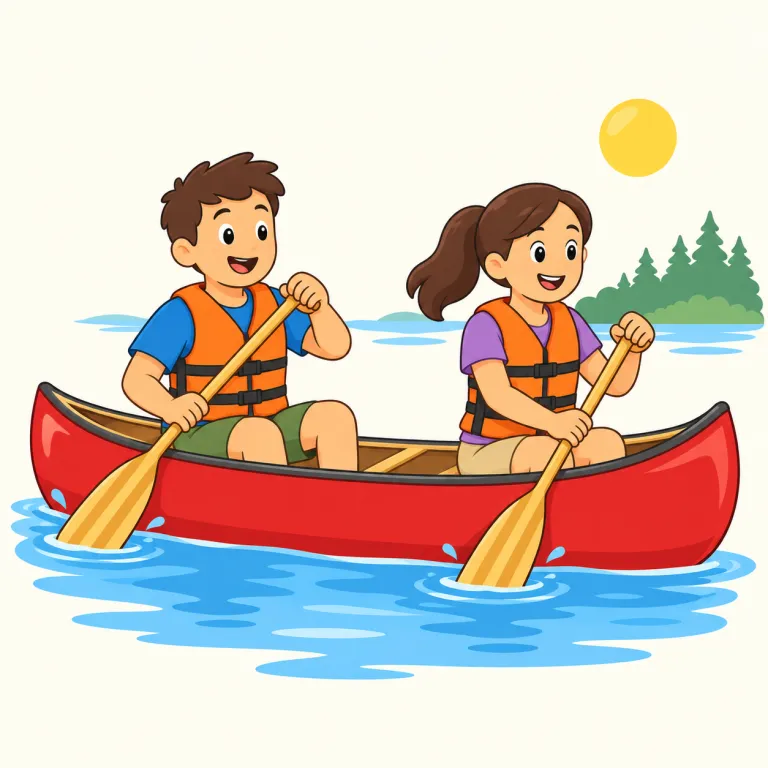
カヌー
解説 Definition
canoeing は canoe(カヌーで行く)の現在分詞・動名詞で、カヌーに乗ること、カヌーをすることという意味です。スポーツやレジャーとして川や湖で行う活動を表すときに使われます。
The present participle and gerund of canoe, meaning traveling or taking part in a sport or recreational activity in a canoe, usually by paddling on a river, lake, or other body of water.
覚え方のコツ Memory Tip
canoeing は canoe に -ing を付けた現在分詞・動名詞で、「カヌーで進むこと・カヌー活動」を表します。語末の e を残して canoeing と綴る点が重要で、発音は /kəˈnuːɪŋ/。go canoeing、canoeing on a lake、canoeing down a river の組み合わせで、櫂を使って湖や川を進むレジャーや競技を思い浮かべます。
Connect canoeing with the noun and verb canoe: the vessel gives its name to the activity of traveling in it. Unlike many verbs ending in silent e, canoe keeps its e before -ing, producing canoeing and the pronunciation /kəˈnuːɪŋ/. Picture paddling a narrow boat across a lake or down a river. The most useful pattern is go canoeing, especially in leisure and travel contexts. Also learn canoeing safety and competitive canoeing. Do not confuse it with rowing, which normally uses oars attached to the boat rather than a freely held paddle.
例文
We went canoeing on the lake yesterday.
私たちは昨日、湖でカヌーをしました。
Canoeing is popular at the summer camp.
そのサマーキャンプではカヌーが人気です。
They learned basic safety rules before canoeing down the river.
彼らは川でカヌーをする前に、基本的な安全ルールを学びました。
canoeing の類義語・関連語
canoeing の語源・成り立ち Etymology
スペイン語経由でカリブ海の先住語「canoa」に由来し、「canoe」に接尾辞「-ing」を付けた形です。もともと木をくりぬいた舟を指すため、「細長い舟を櫂で漕ぐ行為」という意味が納得しやすいです。同派生語に「canoer」があります。
Canoeing is formed from canoe and the suffix -ing. Canoe entered English through Spanish canoa, which Spanish explorers borrowed from an Indigenous language of the Caribbean for a type of narrow boat, often made from a hollowed tree trunk. English later developed canoe as a verb meaning to travel by canoe. The -ing form names the ongoing action or the sport and leisure activity, with the final e retained in spelling.
同じレベルの語彙をもっと
外部辞書で調べる
この英単語をクイズで覚えよう