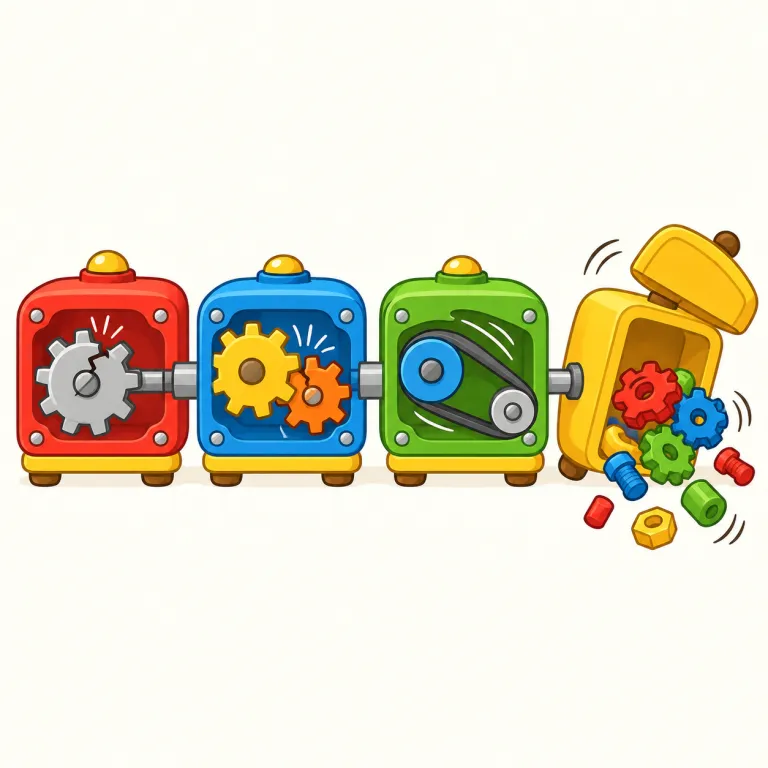
連鎖する
解説 Definition
chaining は chain(連鎖させる、つなぐ)の現在分詞・動名詞です。物事が次々につながることや、複数の動作や要素を連結することを表します。
Chaining is the action or process of linking objects, actions, commands, tasks, or events so that they form a connected sequence, often with one step leading into the next. It is the present participle and gerund form of the verb chain.
覚え方のコツ Memory Tip
chaining は動詞 chain「鎖でつなぐ・連鎖させる」に -ing をそのまま付けた現在分詞・動名詞で、語末 n は重ねません。金属の輪が一つずつ続く像から、steps、tasks、commands、errors が次々につながる場面へ広げ、is chaining と Chaining tasks の両構文で覚えましょう。
Begin with the base verb chain and add -ing directly: chain becomes chaining, with no doubled n and no final e to remove. The pronunciation preserves the base word and adds the “ing” sound. Visualize metal links joined one after another, then transfer that image to abstract sequences such as chaining tasks, commands, methods, or errors. In “The program is chaining several steps,” it forms a progressive verb. In “Chaining tasks saves time,” it is a gerund naming the activity. The key idea is deliberate or resulting connection in sequence, while concatenate is a more technical alternative often used for data or strings.
例文
The errors kept chaining through the system.
エラーがシステム全体で次々と連鎖していきました。
The program works by chaining several small steps.
そのプログラムは、いくつかの小さな手順を連鎖させて動きます。
Chaining tasks can make the process faster, but it also adds risk.
作業を連鎖させると処理は速くなりますが、リスクも増えます。
chaining の類義語・関連語
類義語
派生語
chaining の語源・成り立ち Etymology
chaining は chain「鎖・つなぐ」に -ing が付いた形で、chain は古フランス語 chaine、さらにラテン語 catena に由来します。金属の輪を次々つなぐ像が、そのまま物事を連鎖させる意味へ広がりました。関連語は chain, concatenate.
Chaining is formed by adding -ing to the verb chain. Chain entered English from Old French chaine, which goes back to Latin catena, “chain.” The original image is a series of metal rings linked together. English extended that physical sense to actions, events, commands, and processes connected in sequence, so chaining can describe either literal fastening or the linking of abstract steps.
同じレベルの語彙をもっと
外部辞書で調べる
この英単語をクイズで覚えよう