包み込む、外界から隔離する
verb 動詞人を毛布などですっぽり包むこと、または自分を外界の問題や不快な現実から隔離して守ることを表す動詞です。cocoon oneself in/from ... や be cocooned in ... の形で、物理的な包み込みにも比喩的な引きこもりにも使われます。
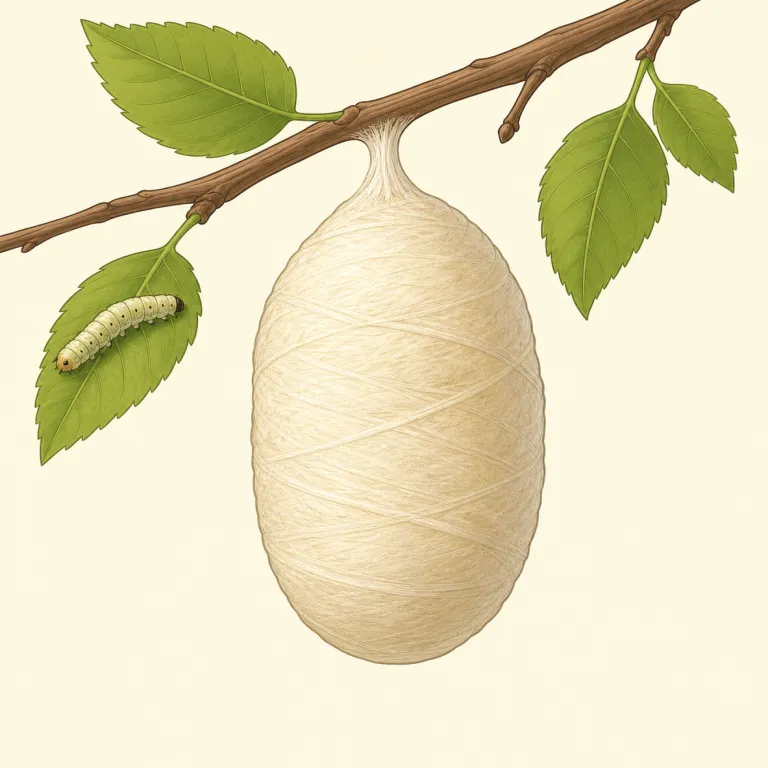
蚕などの昆虫が変態するときに糸で包んで作る保護殻です。内部では蛹が安全に育つために外敵や衝撃から守られます。そこから転じて、安心して過ごせる守られた居場所の比喩としてもよく使われます。
A cocoon is a soft protective covering made by some insects while they develop into their adult form. It is commonly used in biology when talking about moths and similar insects. The word can also be used more generally for a safe, closed space.
cocoon は「中身を外から守る包み」として覚えると定着しやすいです。shell は硬い殻、nest は住みか、cover はただ覆うだけですが、cocoon は“やわらかく包んで安全に守る”感じ。昆虫の繭だけでなく、be cocooned in blankets や live in a cocoon のように、毛布・家庭・安心圏に包まれて外界から切り離された状態にも使えます。『保護』『隔離』『ぬくもり』を一緒に思い出すと忘れにくく、cocoa や coconut など見た目が似る語と混同しないことも大事です。
Remember `cocoon` as a soft protective covering. Unlike a hard `shell` or a simple `cover`, a cocoon wraps something safely. It also appears in expressions about comfort, like being `cocooned in blankets`.
The caterpillar spun a silk cocoon around itself.
その芋虫は自分のまわりに絹の繭を作った。
Inside the cocoon, the pupa rested quietly.
繭の中で蛹は静かに休んでいた。
She created a cozy cocoon of blankets on the sofa.
彼女はソファで毛布を重ねて、居心地のいい繭のような空間を作った。
文脈によって、次の意味でも使われます。
人を毛布などですっぽり包むこと、または自分を外界の問題や不快な現実から隔離して守ることを表す動詞です。cocoon oneself in/from ... や be cocooned in ... の形で、物理的な包み込みにも比喩的な引きこもりにも使われます。
フランス語 cocon から入り、その前は古仏語 coque「殻」、さらにラテン語 coccum、ギリシャ語 kokkos「種・粒」へさかのぼります。小さな殻や粒のイメージがもとにあるので、生き物を包む「繭」が cocoon なのだと納得できます。関連語は coccus, coccoid。
Cocoon came from French cocon. It goes back through older French forms to words meaning "shell" or "small rounded object," ultimately from Greek kokkos, "berry" or "seed." The idea was something small and enclosed, which fits how the word came to mean the protective case spun around an insect.
この英単語をクイズで覚えよう