入れ子にする、重ねて収める
verb 動詞複数の容器や物を、大きいものの中に小さいものが収まるよう重ねる、またはそのように収まること。bowls nest inside one anotherのように使い、鳥が巣を作る意味ではなく、入れ子状になる配置を表す。
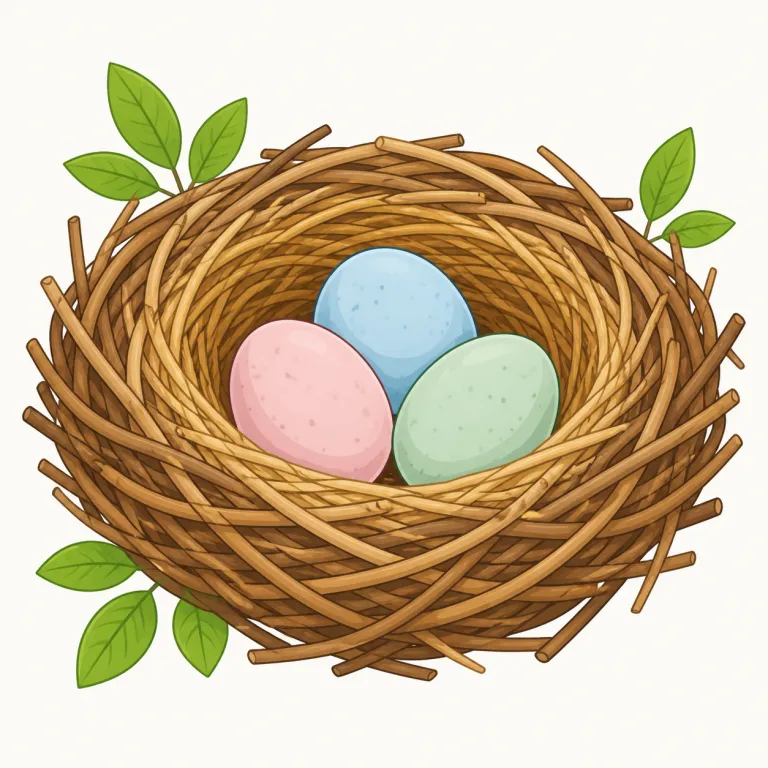
nest は英検4級・TOEFL 80・IELTS 6.5レベルの英単語で、「巣」という意味があります。発音記号は /nɛst/ です。
鳥や小動物が卵を産んだり、子を育てたりするために作る住みかを指します。木の枝、草、泥などで作られ、卵やひなを守る場所として使われます。
A nest is a place built by birds, insects, or some animals to live in and keep their eggs or babies safe. It is usually made from natural materials such as sticks, leaves, or grass. The word can also be used more generally for a small, protected home-like place.
nest はまず bird’s nest で固定すると覚えやすい語です。鳥が卵やひなを守る「こもる場所」のイメージを中心に置くと、ただの house ではなく、小さく包み込む住みかだとつかめます。動詞 nestle や nesting にも同じ核があり、「中におさまる・寄り添う」感覚でつながります。empty nest は子どもが独立した後の家庭という表現なので、巣=家族の居場所という広がりも一緒に押さえると定着します。
Fix `nest` first with the strong image of a `bird's nest`. It is not just a house, but a small, protective place that holds eggs or young birds. This idea also helps with related words like `nesting` and expressions like `empty nest`.
A bird sits in its nest.
鳥が巣にいます。
The nest has three eggs.
その巣には卵が3つあります。
Baby birds sleep in the nest.
ひな鳥たちは巣で眠ります。
文脈によって、次の意味でも使われます。
複数の容器や物を、大きいものの中に小さいものが収まるよう重ねる、またはそのように収まること。bowls nest inside one anotherのように使い、鳥が巣を作る意味ではなく、入れ子状になる配置を表す。
大きさの異なる複数の物が、使わないときには互いの中に収まるよう作られた一組を指す。a nest of tablesやa nest of boxesの形で使われ、鳥などの住みかではなく、入れ子式の家具や容器を表す。
nest は古英語 nest に由来し、さらにゲルマン祖語 *nistaz へさかのぼります。もともと鳥が卵やひなを置く「休み場・住みか」の感覚を持ち、nestle や nesting にもその核が残るので、「包み込む巣」の像から意味をつかめます。
"Nest" comes from Old English "nest," from an older Germanic root. It originally meant the place where a bird rests, lays eggs, and raises its young. That image of a small, protective home remains in related words like "nestle" and "nesting."
この英単語をクイズで覚えよう