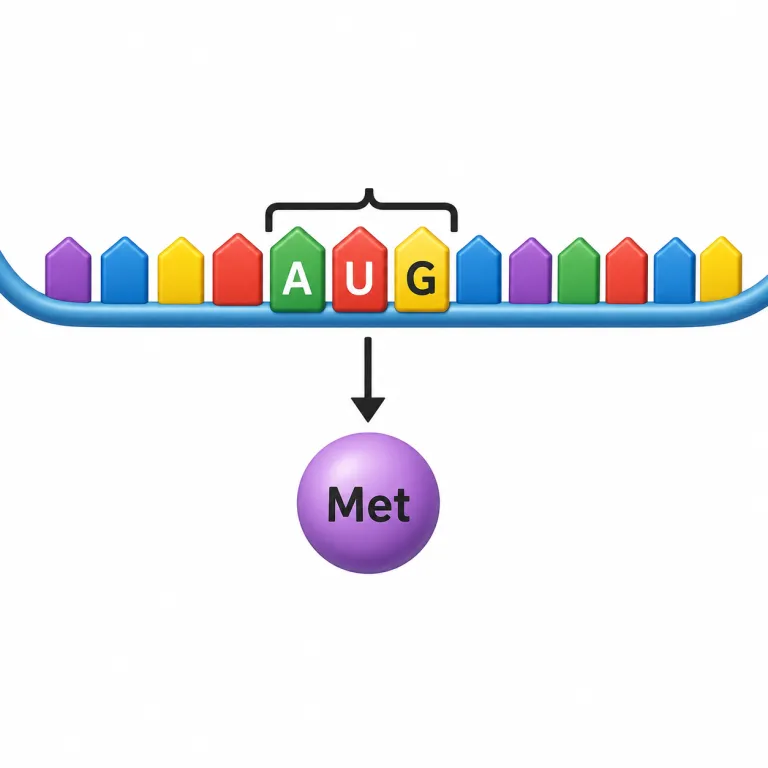
コドン
解説 Definition
遺伝子のDNAやRNAにおいて、3つの塩基が1組になった配列です。多くは一つのアミノ酸を指定しますが、翻訳の終了を示す stop codon のようにアミノ酸を指定しないものもあります。
A codon is a group of three nucleotides in DNA or RNA. In biology, each codon gives an instruction, usually for adding a specific amino acid or for stopping the process of making a protein.
覚え方のコツ Memory Tip
codon はまず code を思い出すと定着しやすい語です。遺伝情報の中で、3つの塩基が1組になって「このアミノ酸を入れろ」または「ここで止まれ」という指示を出す、いわば3文字のコードだと捉えると覚えやすいです。遺伝学では triplet code という発想と結びつけるとさらに強いです。似た語の anticodon は tRNA 側で対応して結びつく相手なので、codon は“指示として読まれる側”、anticodon は“対応して受ける側”と整理すると混同しにくくなります。
Think of `code` inside `codon`. In biology, a codon is like a small three-letter code, so linking it with `triplet code` makes it easier to keep. To avoid confusion, remember: `codon` gives the instruction, while `anticodon` matches it.
例文
Most codons in mRNA specify a particular amino acid during protein synthesis.
mRNAのコドンの多くは、タンパク質合成の際に特定のアミノ酸を指定する。
The stop codon signals the ribosome to end translation.
終止コドンはリボソームに翻訳の終了を知らせる。
A mutation in a single codon can alter the entire structure of a protein.
単一のコドンの変異がタンパク質全体の構造を変えることがある。
codon の類義語・関連語
類義語
codon の語源・成り立ち Etymology
codon は1962年に遺伝学で作られた語で、code + 科学語尾 -on から成ります。code はラテン語 codex「木の板の書物」由来で、遺伝情報を記す“符号”の最小単位という感覚から「コドン」になりました。関連語は code、anticodon。
Codon was created in genetics in the 1960s from code + the scientific ending -on. Code ultimately comes from Latin codex, meaning a book or written record. The idea was that a codon is a small unit that carries written genetic information, like part of a code. A related word is anticodon.
同じレベルの語彙をもっと
外部辞書で調べる
この英単語をクイズで覚えよう