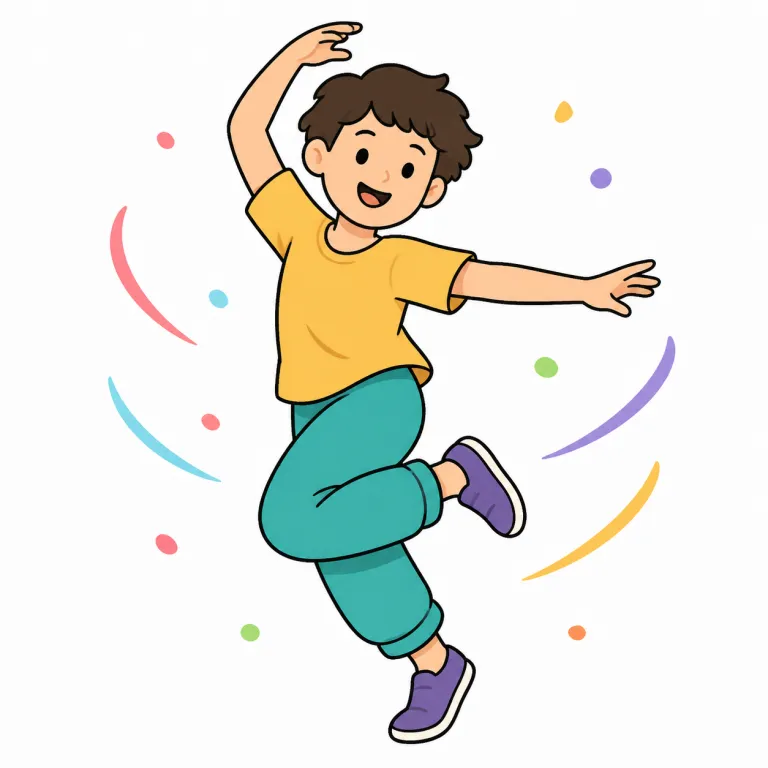
ダンス
解説 Definition
dance は、音楽に合わせて体を動かす「ダンス」や「踊り」という意味です。日本語のカタカナ語とほぼ同じですが、英語では学校行事やパーティーでの踊りの会を指すこともあります。
A dance is a series of body movements, often performed in time with music, or a particular style or instance of such movement. It can also mean a social event at which people dance.
覚え方のコツ Memory Tip
日本語の「ダンス」とほぼ重なりますが、英語の名詞 dance は「踊りの型・一回の踊り」に加え、a school dance のように「踊るための会」も指します。do a dance は踊りを披露する、learn a dance は振りを習う、go to a dance はダンスパーティーへ行く、と名詞の使い分けごと覚えましょう。
The English noun dance overlaps with the Japanese loanword ダンス, but it covers several countable meanings. It may be a particular set of movements, as in “learn a new dance,” one performance, as in “do a dance,” or a social event, as in “go to the school dance.” The verb has the same spelling, so use the sentence structure to identify the noun: a determiner such as a, this, or the often comes before it. Remember the three practical images: movements learned, a performance watched, and an event attended.
例文
I like this dance.
私はこのダンスが好きです。
The dance starts at seven.
ダンスは7時に始まります。
We learned a new dance today.
私たちは今日、新しいダンスを習いました。
dance の類義語・関連語
派生語
紛らわしい語
dance の語源・成り立ち Etymology
古フランス語 dancier(踊る)を経て英語に入った。さらに古くはフランク語(ゲルマン系)*dintjan(あちこち動く)に遡るとされる。関連語:dancer(踊る人)、dancing(踊ること)。中世ヨーロッパの宮廷文化とともに広まった語。
Dance entered Middle English from Old French danser or dancier, meaning “to dance.” Its earlier origin is uncertain, though it is often connected with a Germanic source. The word has been used as both a verb and a noun in English for centuries. From the central idea of rhythmic bodily movement, the noun developed senses for a particular dance form, an individual performance, and a social gathering organized for dancing.
同じレベルの英単語をもっと
外部辞書で調べる
この単語を英単語クイズで覚えよう