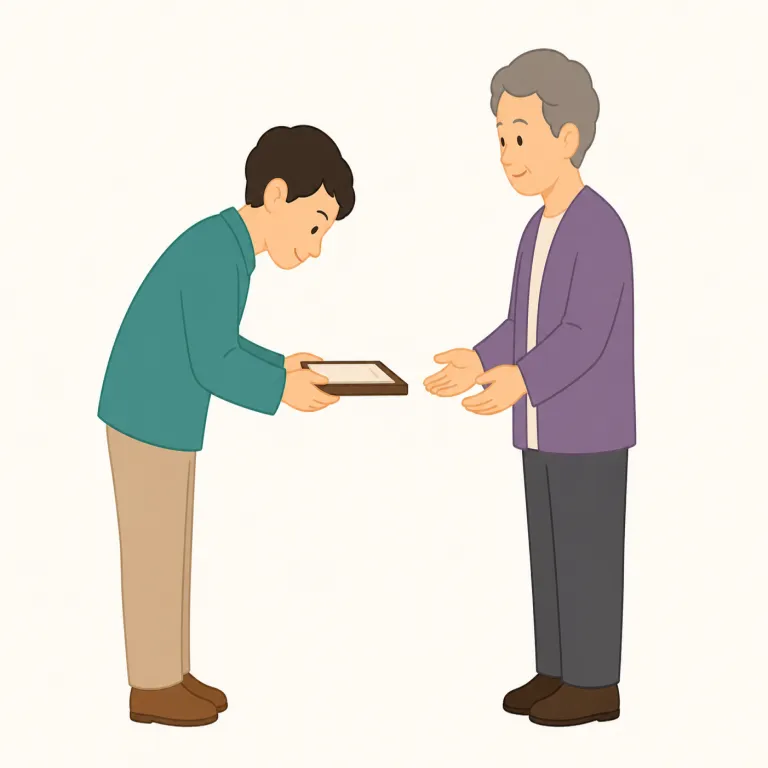
丁重な
解説 Definition
相手に対して深い敬意や丁重さを示すさま。うやうやしい。
Deferential describes behavior that shows respect, politeness, and willingness to accept another person's authority or status. A deferential person acts carefully and respectfully, especially toward someone older, more powerful, or more experienced. It is often used in formal or social situations.
覚え方のコツ Memory Tip
defer を知っていると覚えやすい語です。defer には「延期する」だけでなく「判断を相手に委ねる」感覚があり、deference はそこから「相手を立てる敬意」。deferential はその形容詞で、ただ polite なだけでなく、自分を一歩引いて相手を上に置くような丁重さを表します。deferential tone / manner で出やすく、respectful より上下関係がはっきりしやすい点もセットで覚えると残ります。
This word is easier if you know `deference` and `defer`. Here the idea is not delay, but stepping back and letting the other person take priority. A `deferential` tone or manner is more than just polite; it shows respect with a clear sense of rank.
例文
The young employee was always deferential to her senior colleagues, addressing them formally.
若い社員は常に職場の先輩たちに敬意を払い、丁寧な言葉遣いで話しかけていた。
His deferential tone during the meeting impressed the board members and earned their trust.
会議中の彼の敬意に満ちた口調は取締役たちに好印象を与え、信頼を獲得した。
In Japanese culture, it is customary to be deferential when speaking to elders or those in authority.
日本文化では、年長者や権威ある人に対して敬意を示すことが慣習となっている。
deferential の類義語・関連語
紛らわしい語
deferential の語源・成り立ち Etymology
deferential は deference をもとにした語で、その奥は Latin deferre「運び去る・譲る」です。de-「離れて」+ ferre「運ぶ」から成り、自分を一歩引いて相手に判断を預ける感覚が敬意になりました。refer や transfer も同じ ferre 系です。
Deferential comes from deference, which goes back to Latin deferre, meaning to carry away or yield. It is made from de- and ferre, meaning to carry. The sense developed from stepping back and giving way to another person's judgment, which became the idea of respectful submission; transfer and refer share the same ferre root.
同じレベルの英単語をもっと
外部辞書で調べる
この単語を英単語クイズで覚えよう