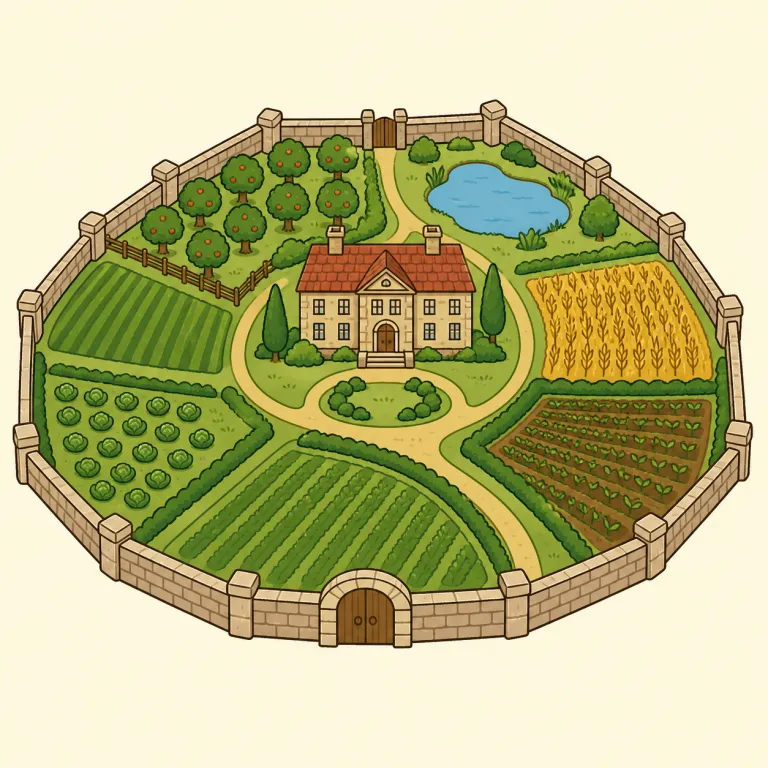
領域、分野
noun 名詞格式ばった用法で、活動・知識・権限などが及ぶ領域や範囲を指す。fieldやdomainに近いが、ある人物や組織が支配したり精通したりする範囲を、比喩的な「領地」として捉えるニュアンスがある。
領主が直接支配・管理する土地。封建時代の所領を指す法律用語。
A demesne is land that is owned and kept by a lord, ruler, or estate owner for their own use. It is an old-fashioned historical word, often seen in texts about medieval society or large estates. In modern English, it may also be used more generally for an area under someone's control.
demesne は、より身近な domain を足場にすると覚えやすい。どちらも「支配の及ぶ範囲」を連想させるが、domain が学問分野・活動領域まで広く使えるのに対し、demesne は意味がかなり限定され、封建制で領主が自分で直接管理する土地を指す。the lord’s demesne や royal demesne のように「誰の直轄地か」と結びつけると残りやすい。歴史・法律寄りの硬い語で、demise など似た綴りの語と混同しないよう注意。
Connect `demesne` with the more familiar word `domain`. Both suggest an area under someone's control, but `demesne` is a much narrower historical word. Remember it in phrases like `the lord's demesne`, where it means land directly controlled by a lord.
The lord managed his demesne directly, employing local peasants to work the land.
領主は直轄領を直接管理し、地元の農民を雇って土地を耕させた。
The ancient demesne stretched from the castle walls to the edge of the forest.
古い領地は城壁から森の端まで広がっていた。
Legal disputes over the boundaries of the demesne lasted for several generations.
領地の境界をめぐる法的紛争は数世代にわたって続いた。
文脈によって、次の意味でも使われます。
格式ばった用法で、活動・知識・権限などが及ぶ領域や範囲を指す。fieldやdomainに近いが、ある人物や組織が支配したり精通したりする範囲を、比喩的な「領地」として捉えるニュアンスがある。
demesne は古フランス語 demaine/demeine を経て、ラテン語 dominicus「主人のもの」に由来します。dominus「主人・領主」と同根で、もともと領主が自分のために直轄した土地を指したので「領地」という意味になります。関連語に domain、dominate。
Demesne came into English through Old French demaine or demeine, from Latin dominicus, meaning "of the lord" or "belonging to the master." It is related to dominus, "lord," and to English words like domain and dominate. The word first referred to land kept under a lord's own direct control, and from that grew its sense of an estate or territory.
この英単語をクイズで覚えよう